Habiba Med
Want to get rid of an eyebrow tattoo you don't like anymore? Laser or non-laser eyebrow tattoo removal: it's not the old technique (microblading or powder brows) that decides, it's the color of your brow. Here's how to choose.
Key takeaways
- Blue, intense gray or too dark brows: laser, 4 sessions at most in the best case.
- Orange or yellow brows: the manual method, with glycolic acid.
- You can redo your brows about 3 months after the last session.
- Ideally, have it done by a doctor or at a clinic run by doctors.
The two eyebrow tattoo removal methods
- Laser.
- The manual method, without laser: a liquid remover (a saline solution with glycolic acid) that draws the pigment back up.
Which method? It depends on the color
Whatever technique was used originally (microblading or powder brows), the method is chosen case by case, and above all according to the color.
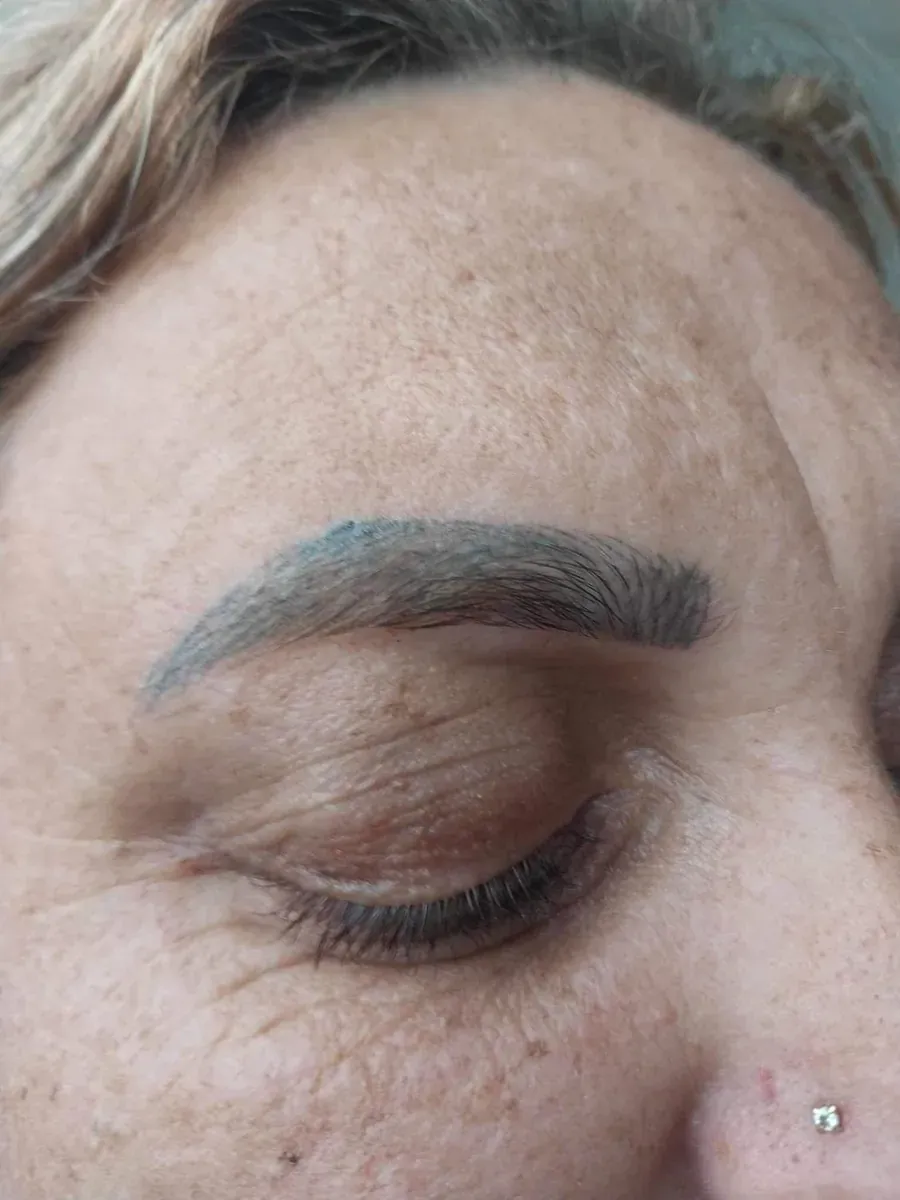
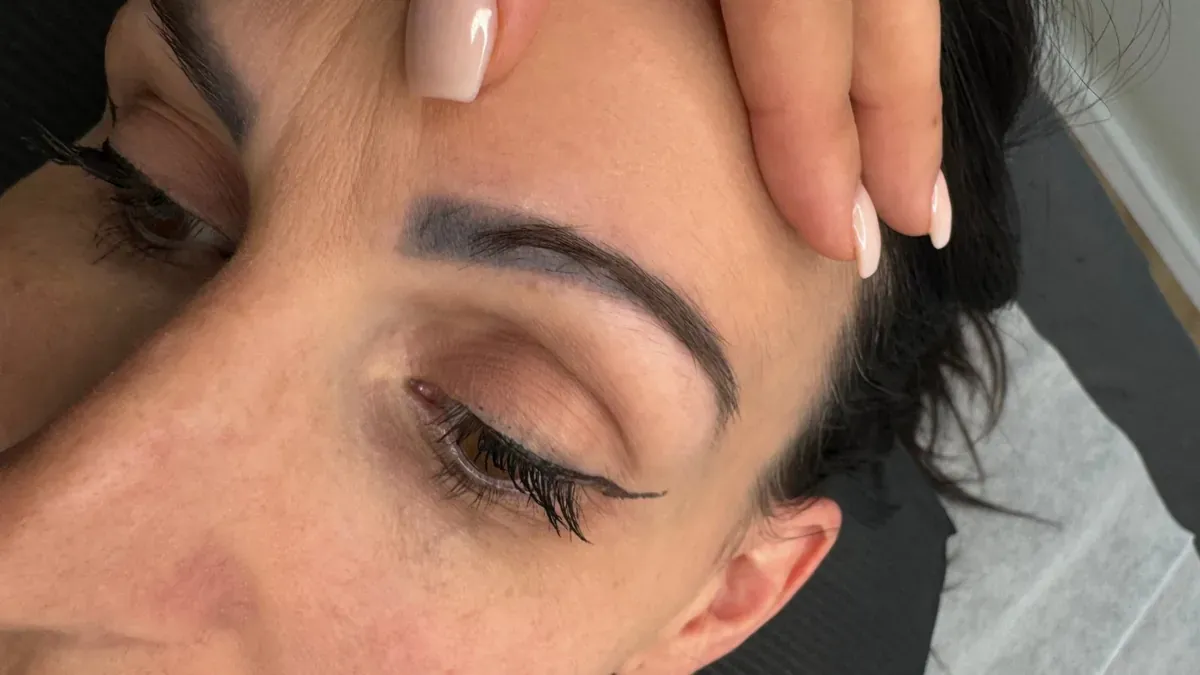
Blue, intense gray or too dark brows: laser
The brow is too saturated, too dark. Laser picks up dark colors very well. In the best case, it all comes off in 4 sessions at most. Once it's all gone, you can get a new tattoo 3 months later, with the technique of your choice, for example powder brows.
Orange or yellow brows: the manual method
On these warm, light colors, laser isn't effective: it doesn't pick up light colors well, and it would take far too many sessions for the orange to fade or disappear. So a manual liquid remover based on glycolic acid is used to treat pigment that's too deep or that the laser can't pick up.
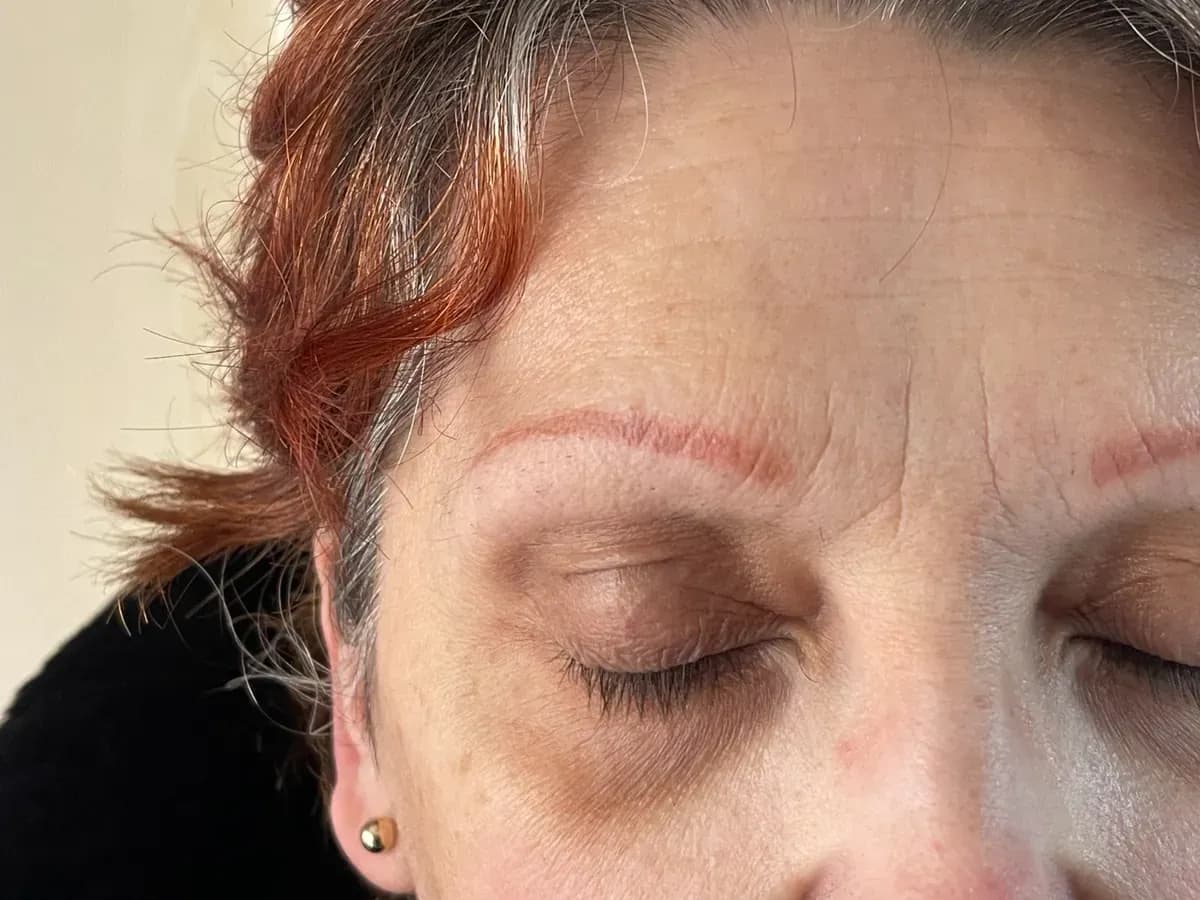
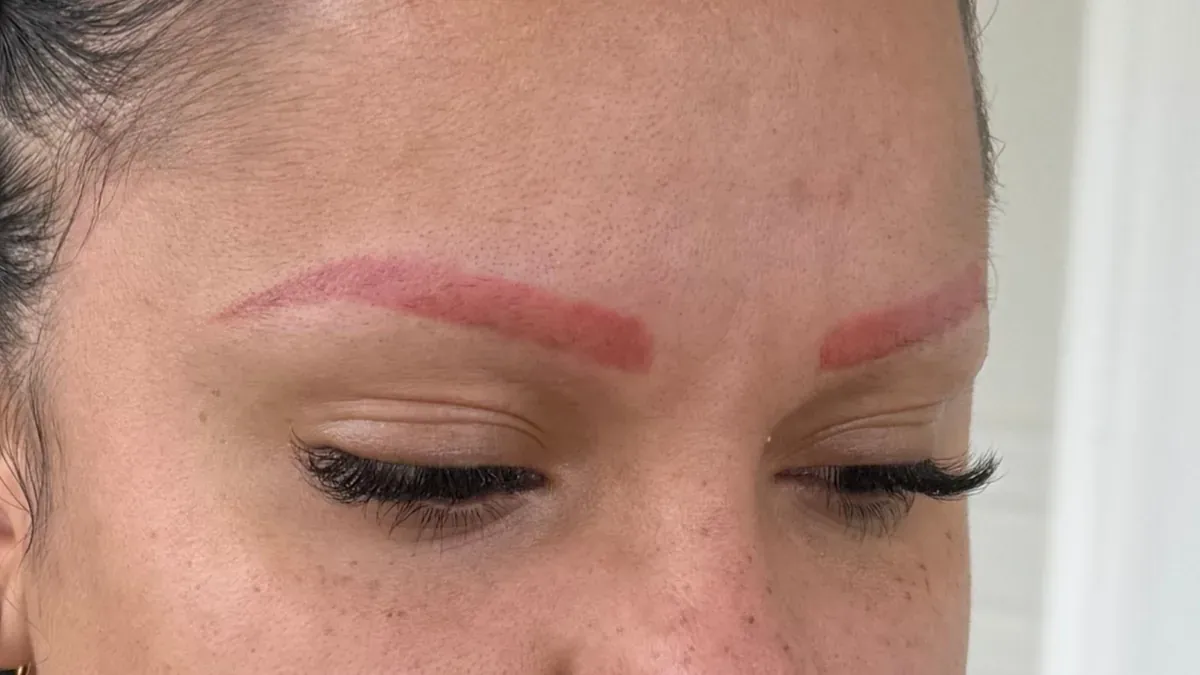
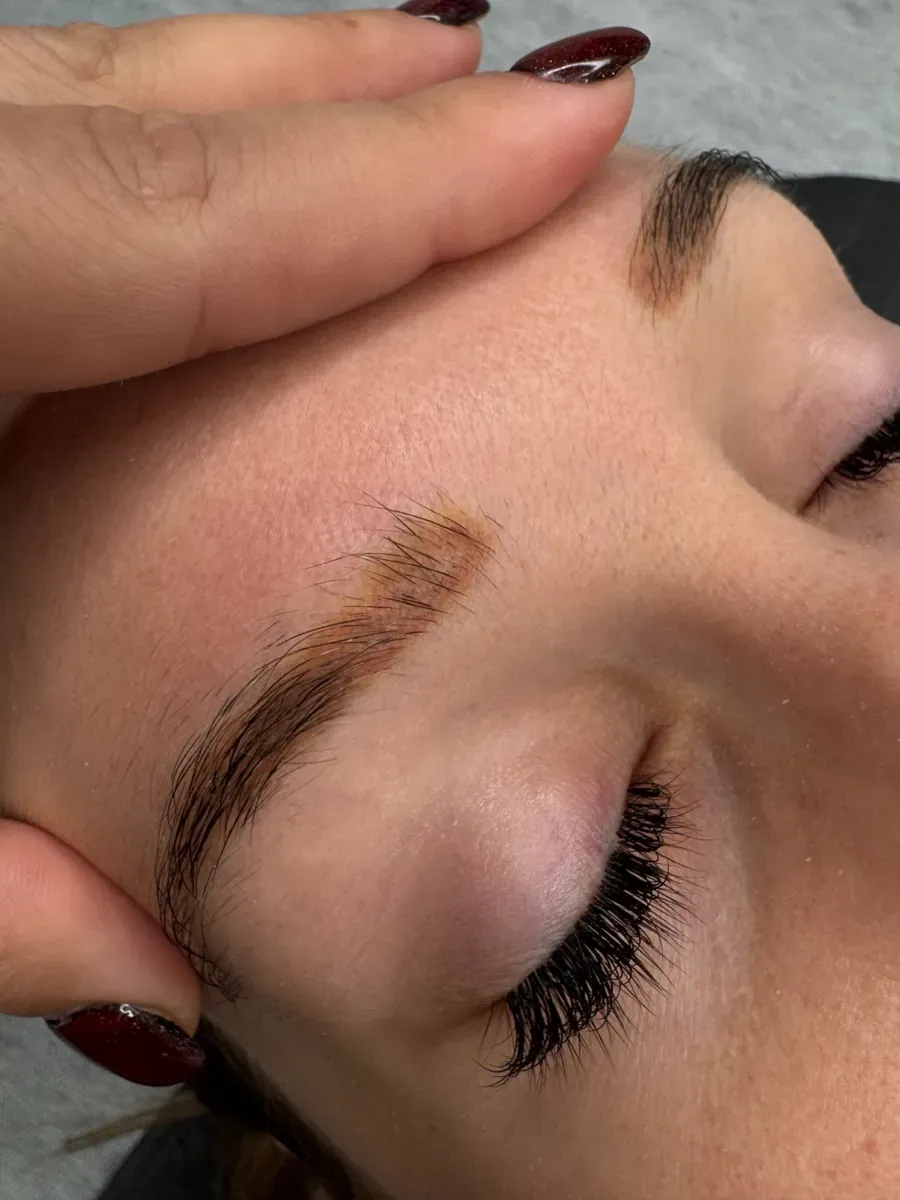
| Brow color | Method | Sessions |
|---|---|---|
| Blue, intense gray, too dark | Laser | 4 at most in the best case |
| Orange, yellow, warm and light colors | Manual method (glycolic acid) | Depends on the case |
What about the brow hairs?
Tattoo removal doesn't necessarily remove the hairs; it depends on the case. When the laser has to be used at high power, it can affect the hairs. This mostly happens with black hairs, because the laser picks up black well: it can then bleach the hair, but won't necessarily make it fall out.
Does eyebrow tattoo removal leave scars?
Rarely, when the laser is up to standard and certified. Scars more often come from the tattoo itself than from the removal: for example, removed microblading where you can still feel the raised strokes in the brow.
So there's more risk of scarring from permanent makeup done too aggressively than from tattoo removal.
After eyebrow tattoo removal: redoing your brows
Wait about 3 months after the last session before getting a new tattoo. You can then start from scratch, with a new shape and the technique you want.
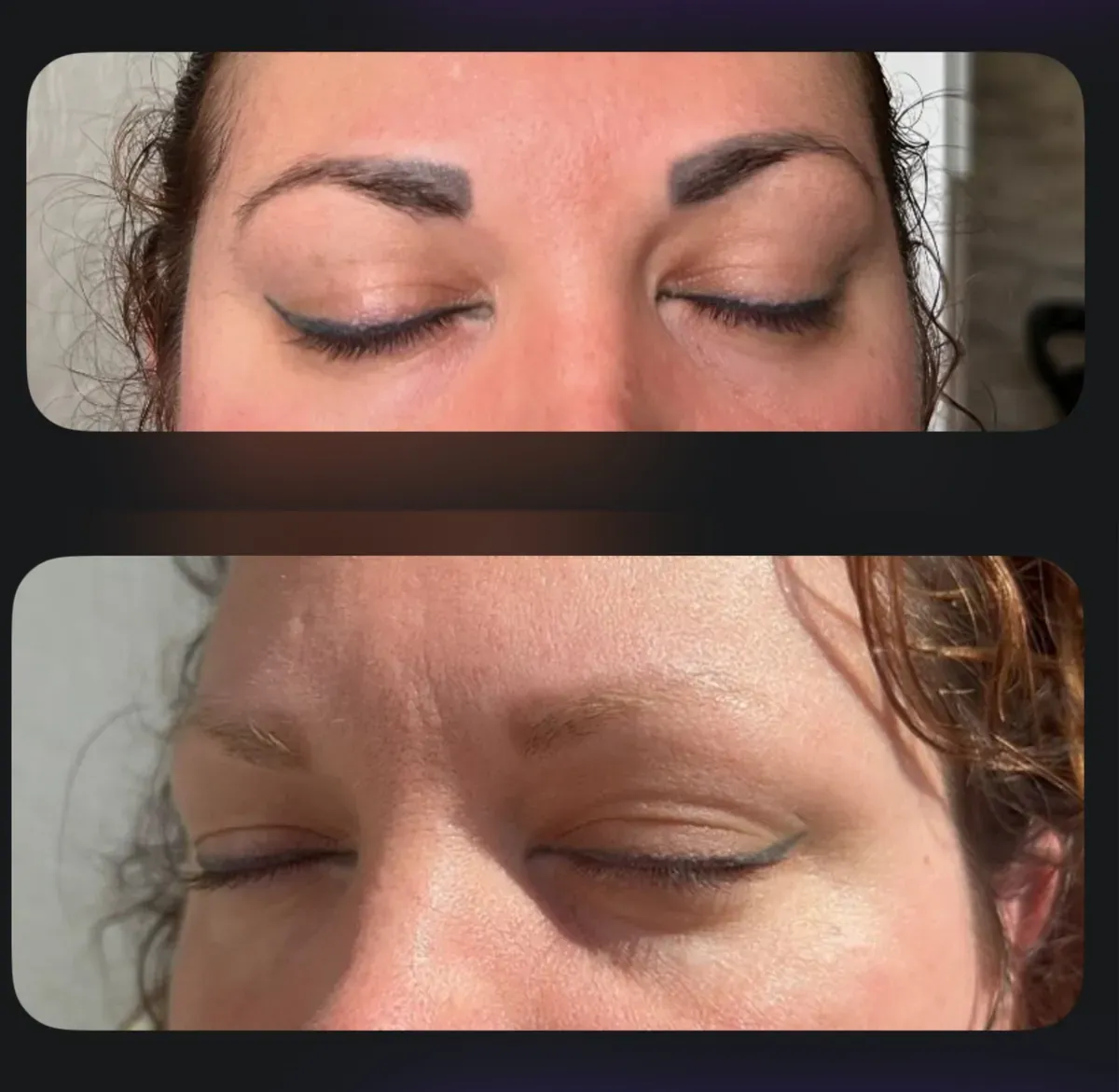
You don't always need to remove everything
If the old tattoo has faded well (at least 60%), has no scarring, and you like the shape, it can be reworked directly on top. See how to fix badly tattooed eyebrows.
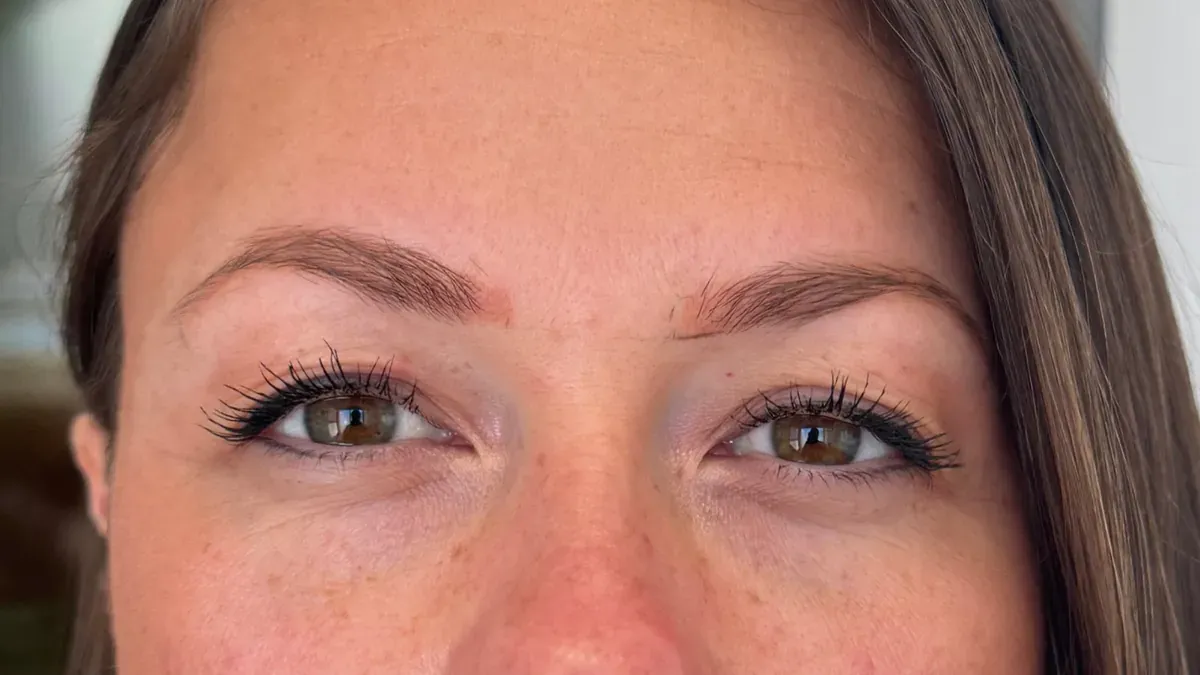
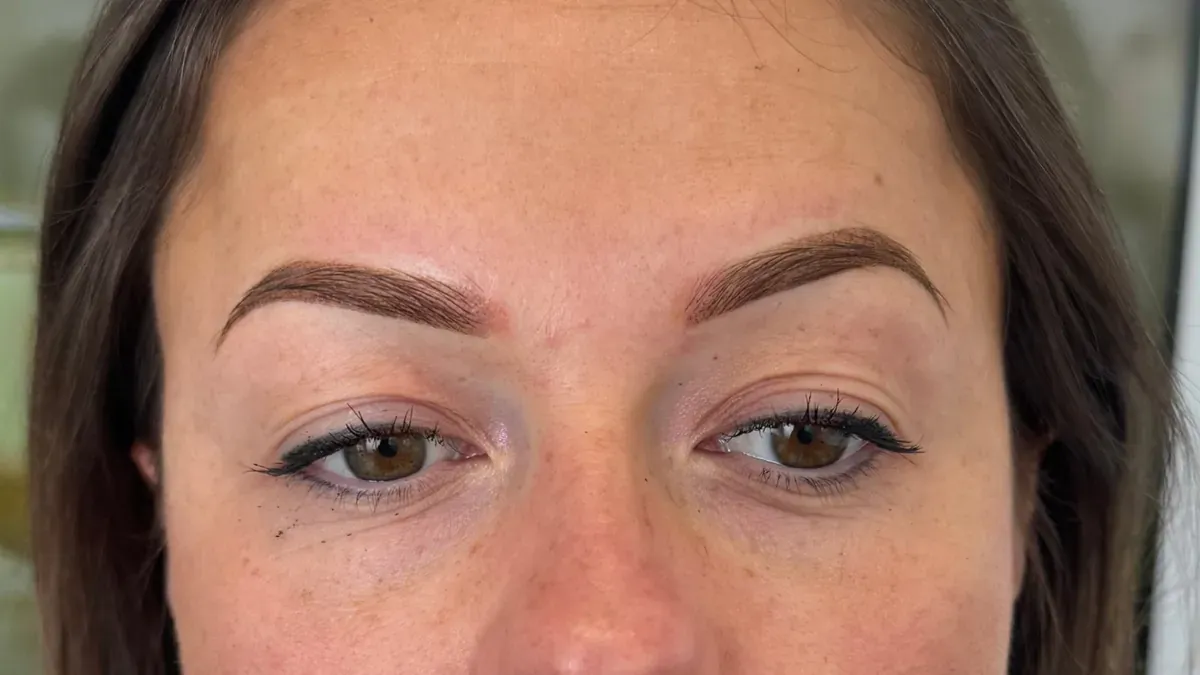
Why you sometimes need removal before redoing your brows
“Skin is like a glass that's already full of water: when it's overloaded with pigment, there's no room left to add more. You first have to empty it out.”
 Habiba Med
What you should never do
No home remedies
Scrubs, soaps, acids, hydrogen peroxide, lemon: they damage the skin without removing the pigment.
Habiba's advice
Have your tattoo removal done by a doctor, a dermatologist, or at an aesthetic clinic run by doctors, to avoid any complications.
And for what comes next, choose your next technique carefully: everything you need to know about powder brows.
Frequently asked questions
Yes, with the right method for the color: laser for dark colors, the manual method for orange and yellow.
With laser, 4 sessions at most in the best case for dark colors. For orange, the manual method is the most effective.
About 3 months after the last session.
Poorly: it doesn't pick up light colors well. The manual method is better suited.
Not necessarily. At high power, the laser can bleach the hairs, especially if they're black, but it won't necessarily make them fall out.
Rarely with a laser that's up to standard. Scars more often come from a tattoo done too aggressively than from the removal.
No. No home remedy works, and they damage the skin.
Ideally by a doctor, a dermatologist or at an aesthetic clinic run by doctors.

Written by
Habiba Med
Permanent makeup artist since 2019 and trainer, I share what I see every day in my studio to help you make the right choices.