Habiba Med
Thinking about getting into permanent makeup? Here's how to become a permanent makeup artist: what the job really looks like, the qualities it takes, a beginner's path from practice to first clients, and how to get the right training.
Key takeaways
- A creative, detail-oriented job, all about natural results.
- Key qualities: patience, precision, an eye for beauty, listening skills and honesty.
- The path: good training, practice, models, then a healed portfolio.
- Your income depends on your prices, your time and your number of clients.
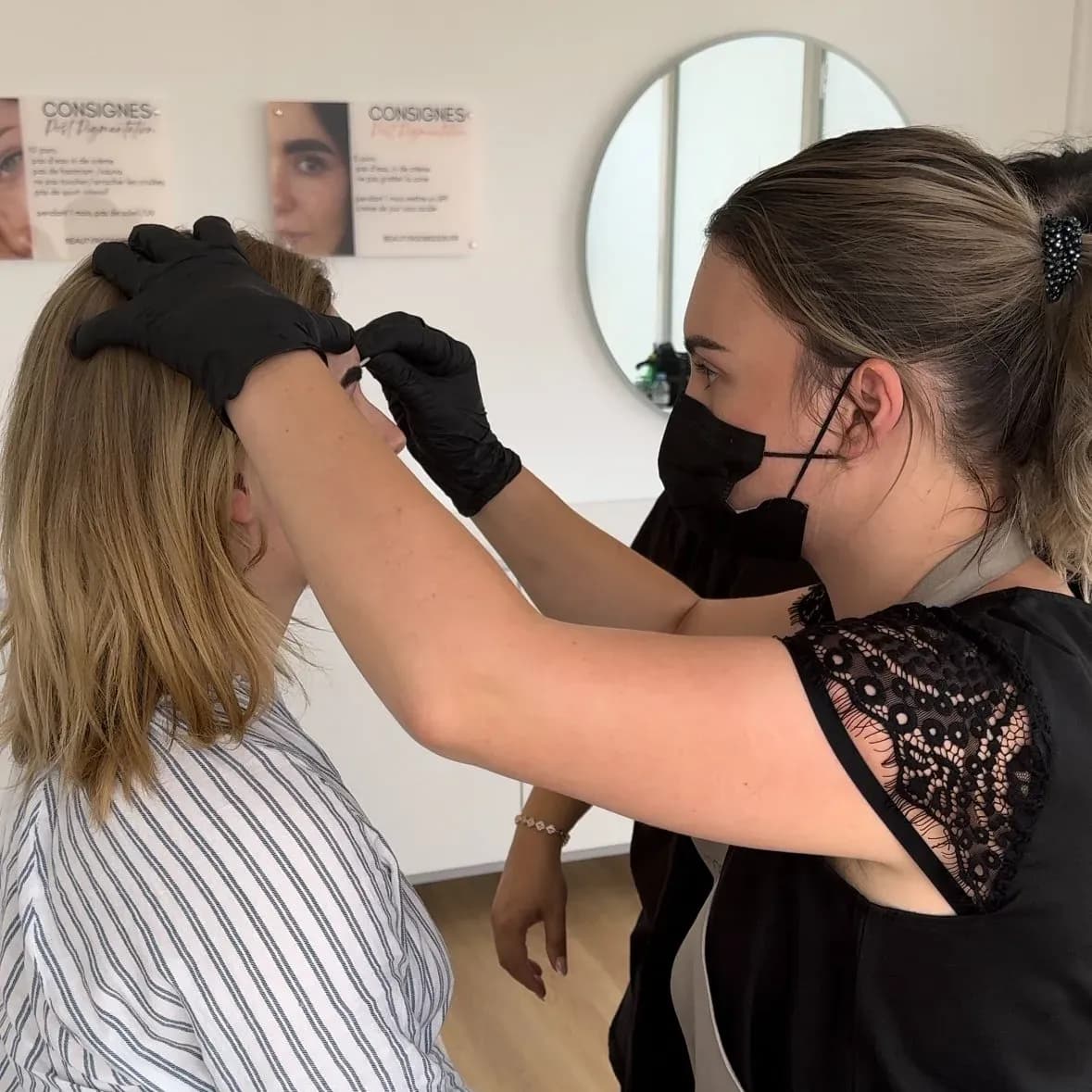
What a permanent makeup artist really does
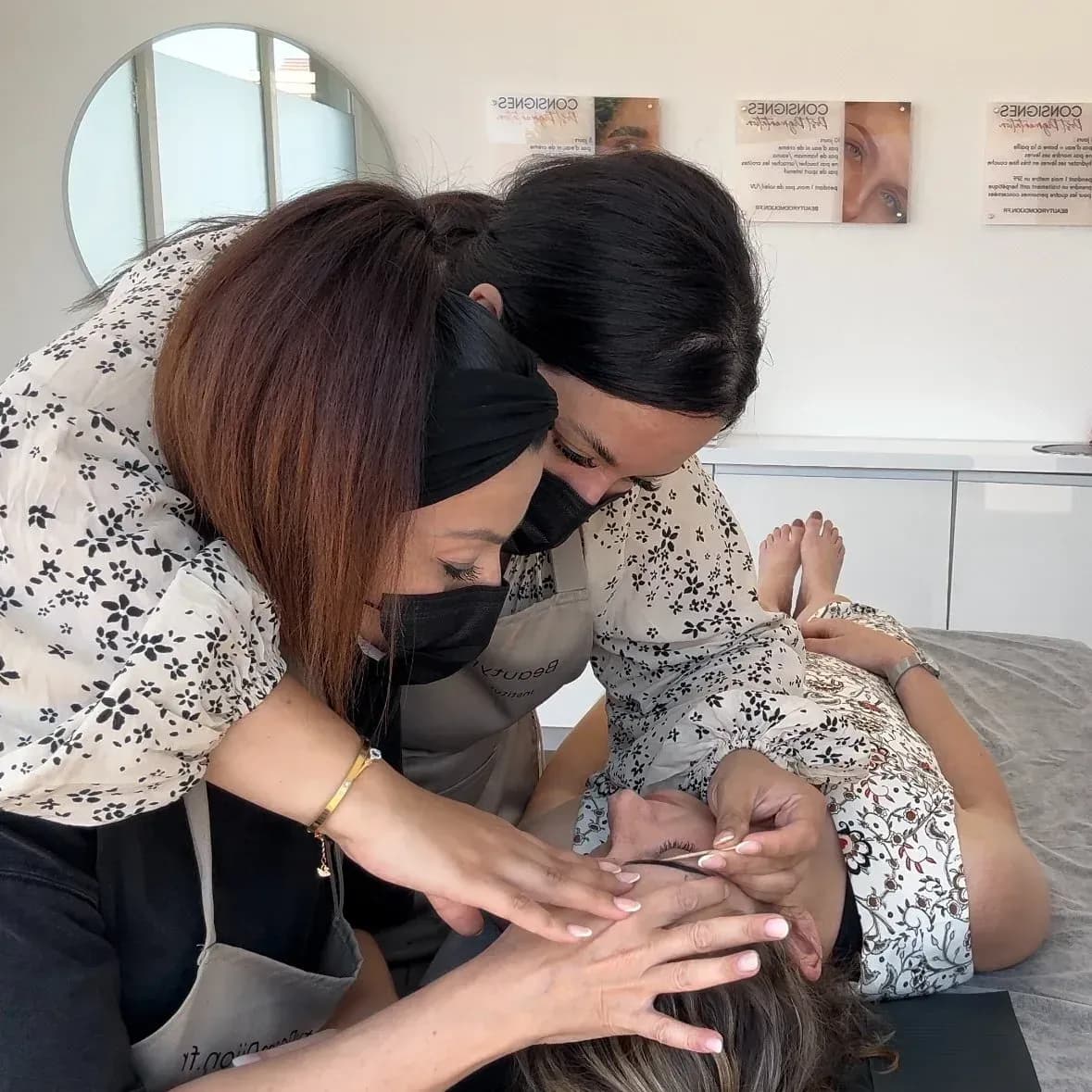
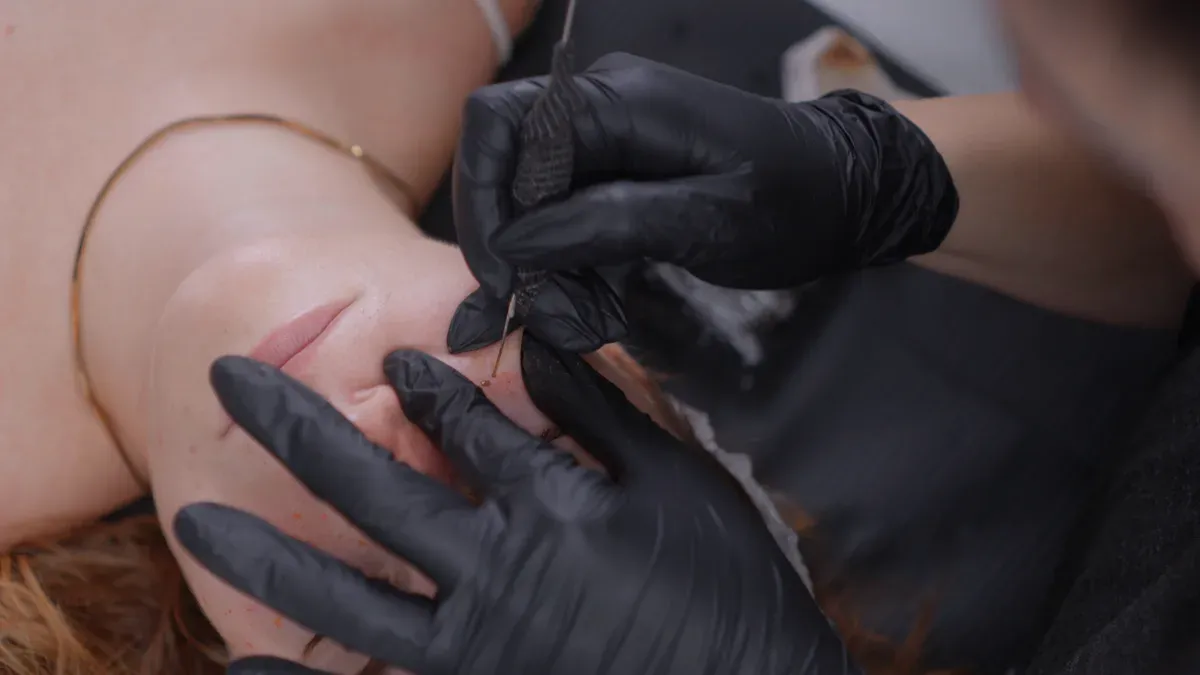
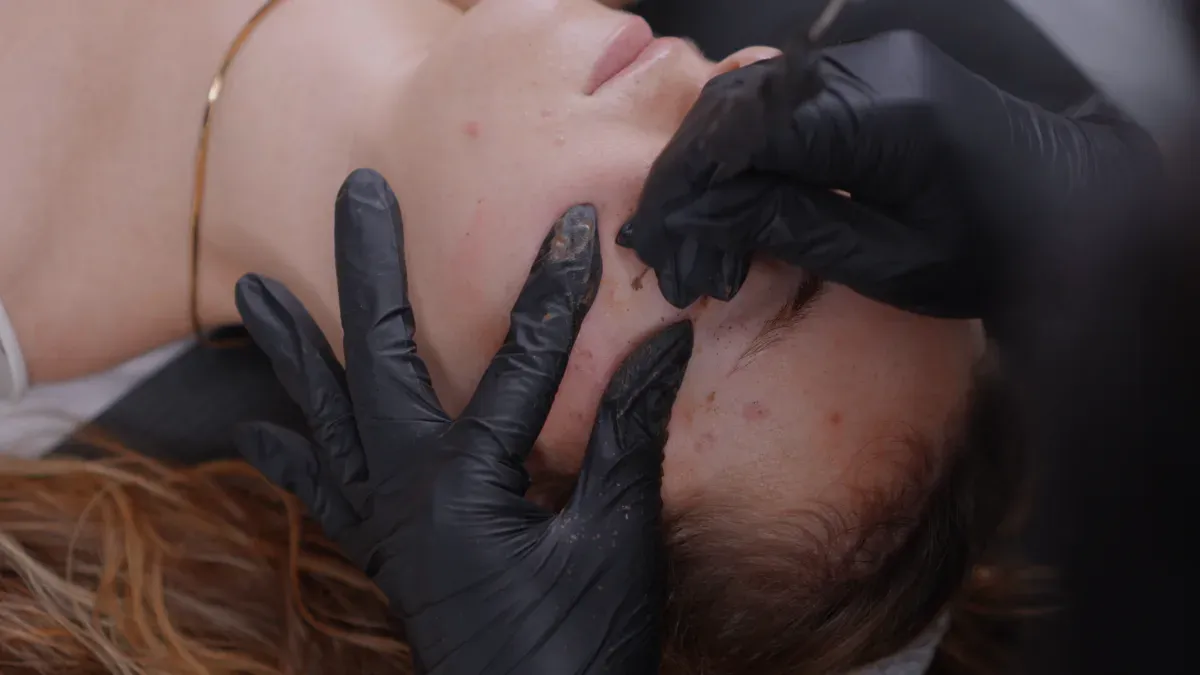
A PMU artist places pigment in the skin to reshape brows, color lips or create freckles. But the job is mostly about listening, drawing, choosing the right color and anticipating the healed result. An appointment often lasts 2 to 3 hours: you don't rush a tattoo.
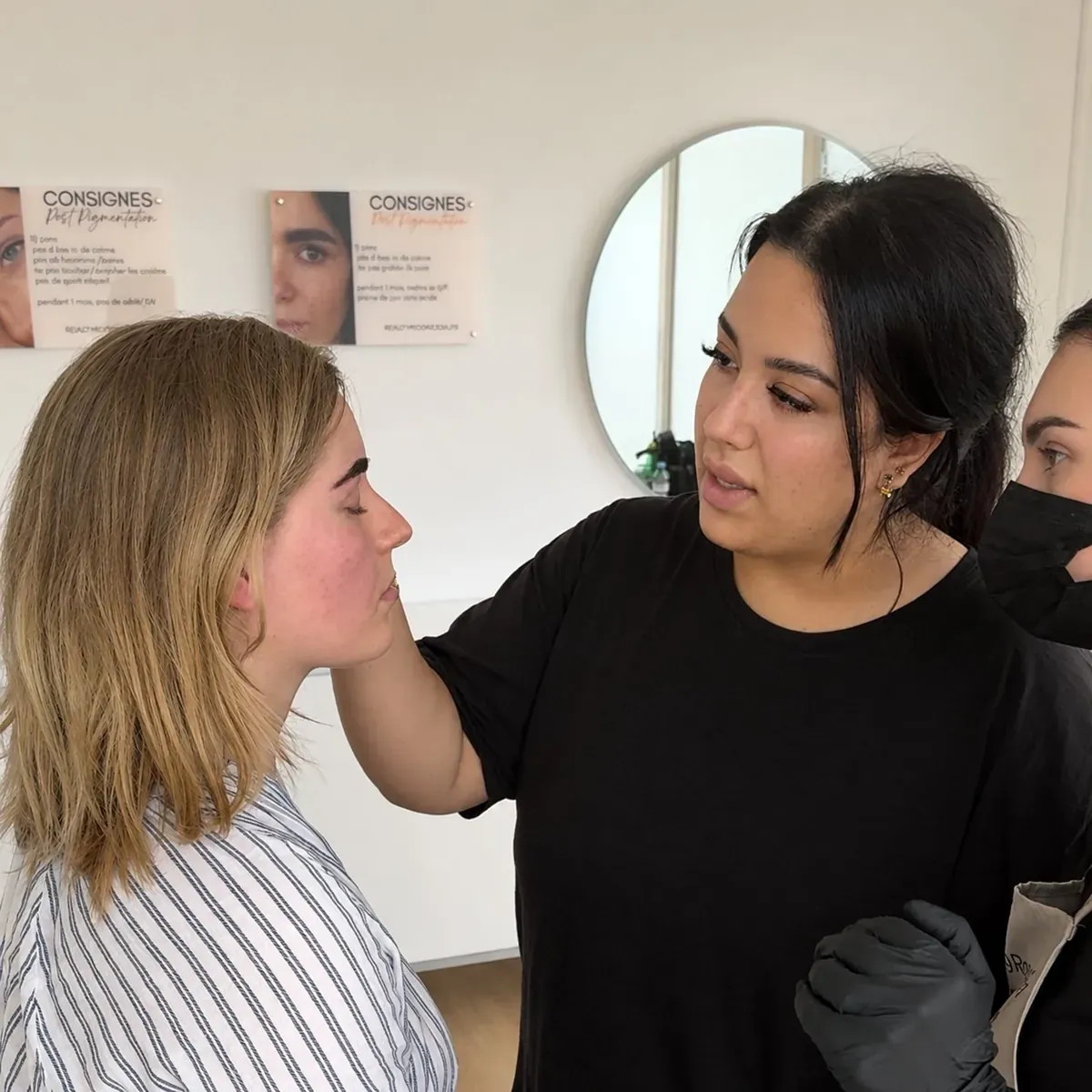 1
Listen and advise
Understand what the client wants, and tell her honestly what will suit her.
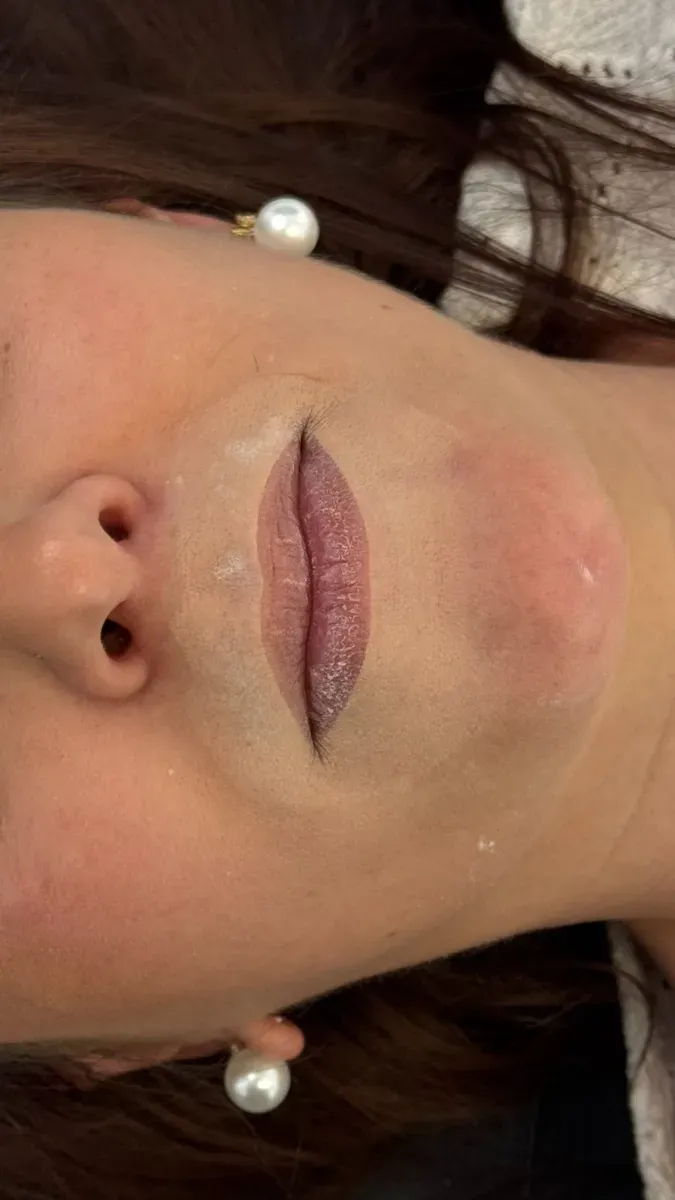 2
Draw
A shape that follows the face, approved by the client before you start.
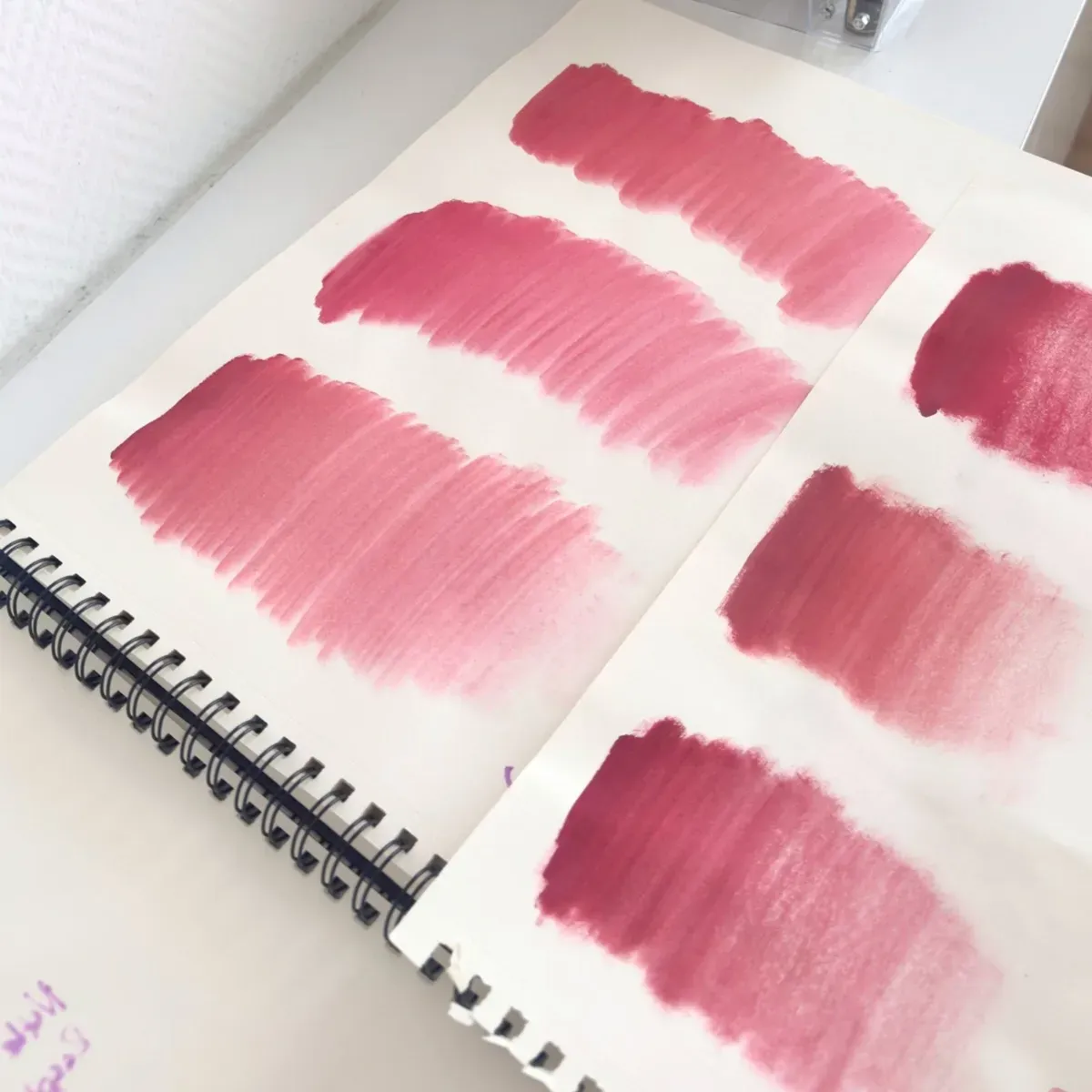 3
Choose the color
Using color theory, based on her skin and what she wants.
 4
Pigment with a light hand
Without ever oversaturating the skin.
The qualities you need to succeed
Precision
A fine, steady hand, which you build through practice.
Patience
With the skin, with clients, and with yourself at first.
An eye for beauty
Seeing what enhances a face, without transforming it.
Listening
Understanding the request, reassuring, explaining the steps and the aftercare.
Honesty
Knowing how to say no when a request isn't right: that's what builds trust.
Curiosity
Keep learning: techniques, skin knowledge and pigments keep evolving.
A beginner's path, step by step
- Get trained with a complete course: technique, skin types, color theory (see how to choose your permanent makeup training).
- Practice on synthetic skin (latex), as many times as you need.
- Get your exercises corrected by your trainer.
- Move on to your first models, with soft, natural results.
- Build a portfolio of healed results.
With serious practice, you can get started in 1 to 2 months.
Which technique should you start with?
| Technique | Why start there |
|---|---|
| Freckles | A quick service, in high demand, accessible to beginners |
| Brows (powder brows) | A simple, repeatable drawing method, even if you can't draw |
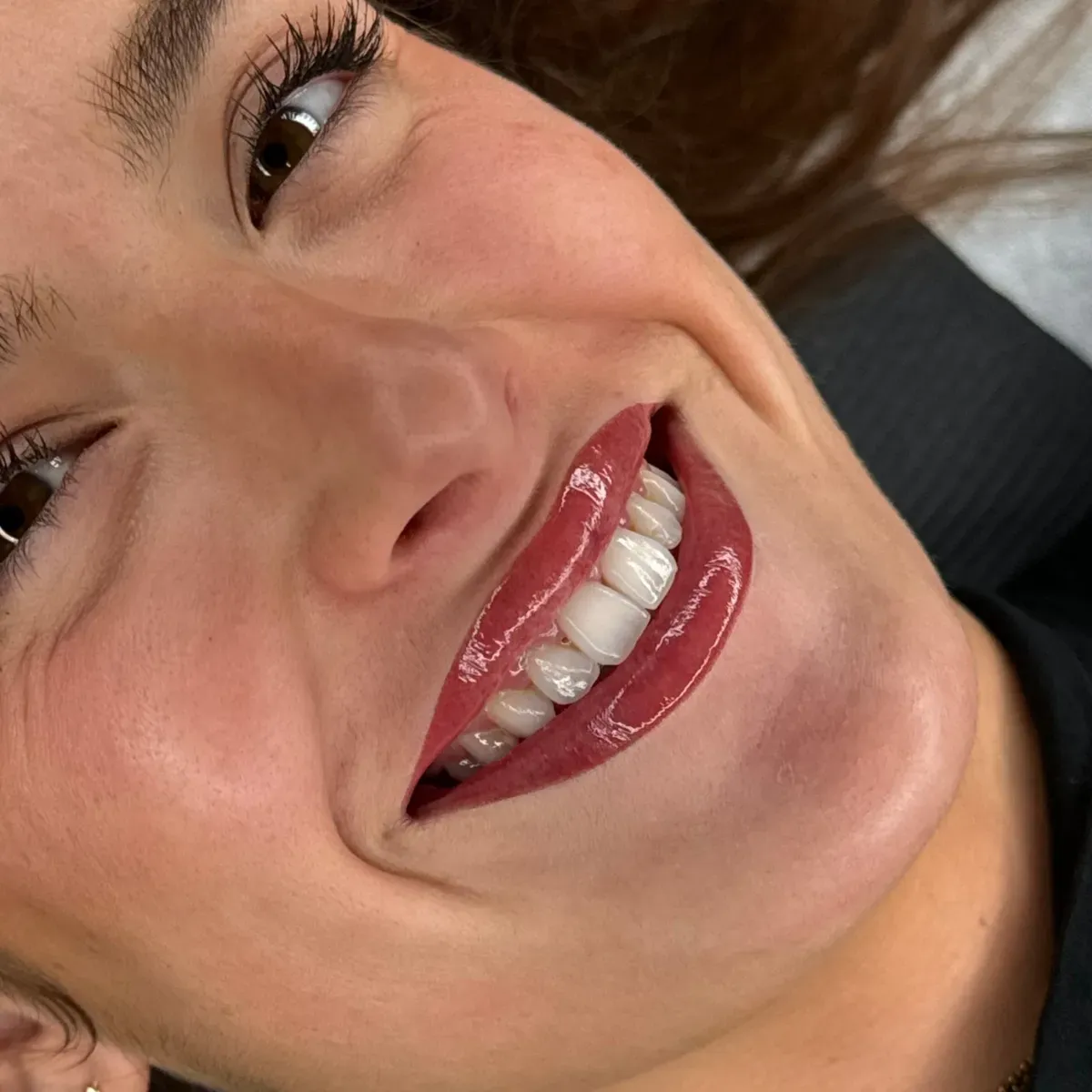
| Lips (lip blush) | Also possible for a beginner, with solid training in color theory |
There's no required order: start with the service you like most.
Understanding skin and pigments
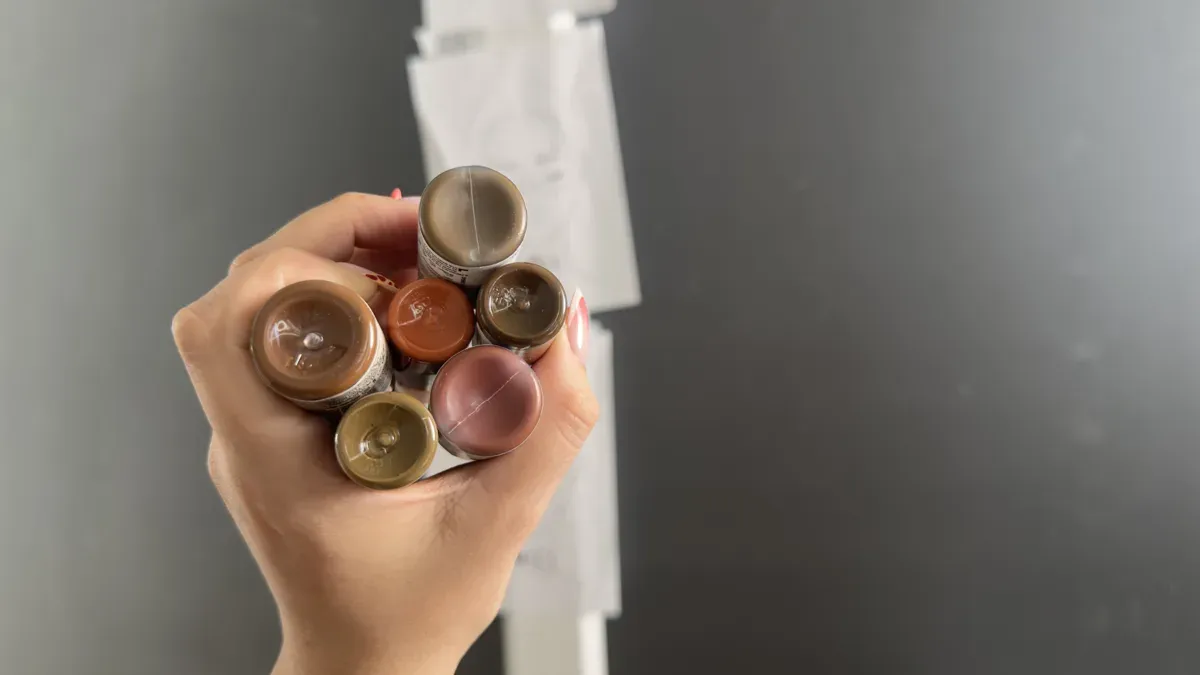
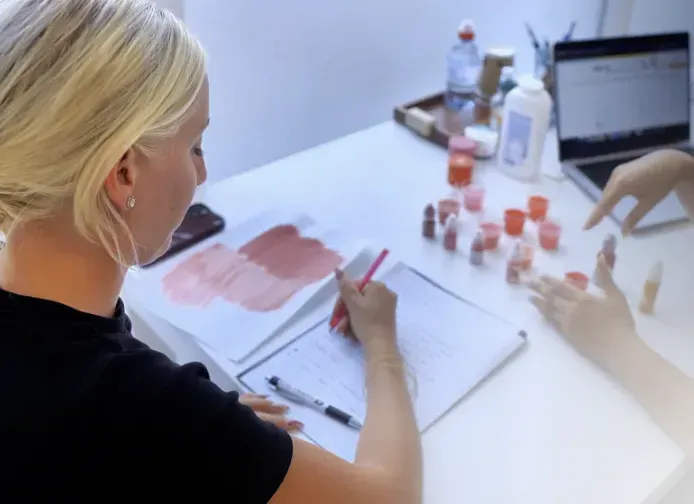
Skin has a big influence on the result: oily, normal, dry, mature or dark, every skin heals differently. And to avoid unwanted results (orange, gray, blue, a mole-like effect), you need to understand pigments: that's what color theory is for. For freckles, Habiba strongly leans toward mineral pigments: that's her opinion, and her experience talking.
How much do permanent makeup artists make?
There's no single figure. Your income depends on your prices (which you set freely), the time each service takes, your number of clients, and your expenses: equipment, single-use supplies, training.
At first
Low prices to find clients and models. That's a normal process for a beginner.
With experience
Beautiful healed results, client trust, and prices that grow with your experience.
What goes into a price: permanent makeup cost explained.
Finding your first clients
- Start with models, at low prices.
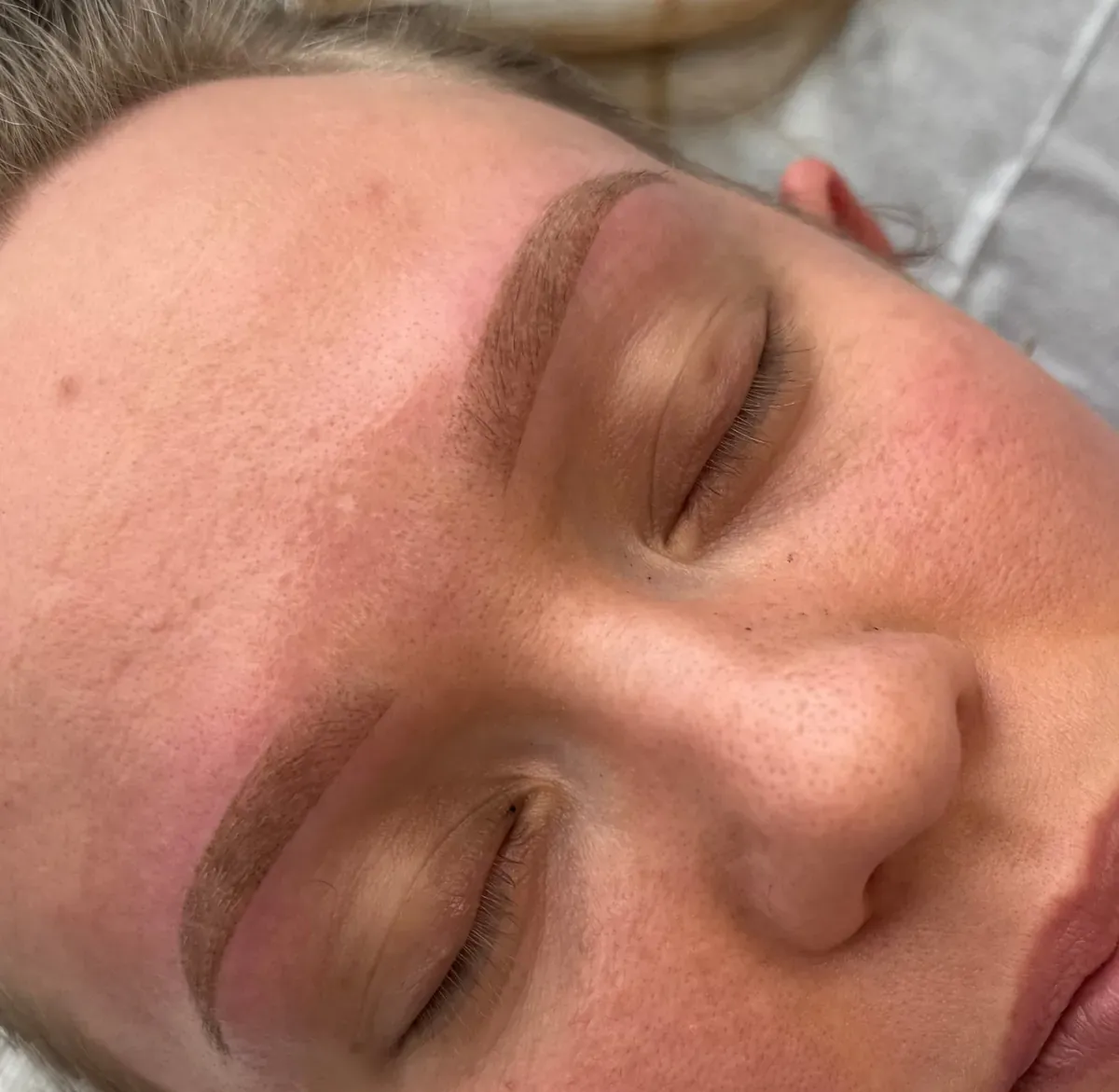
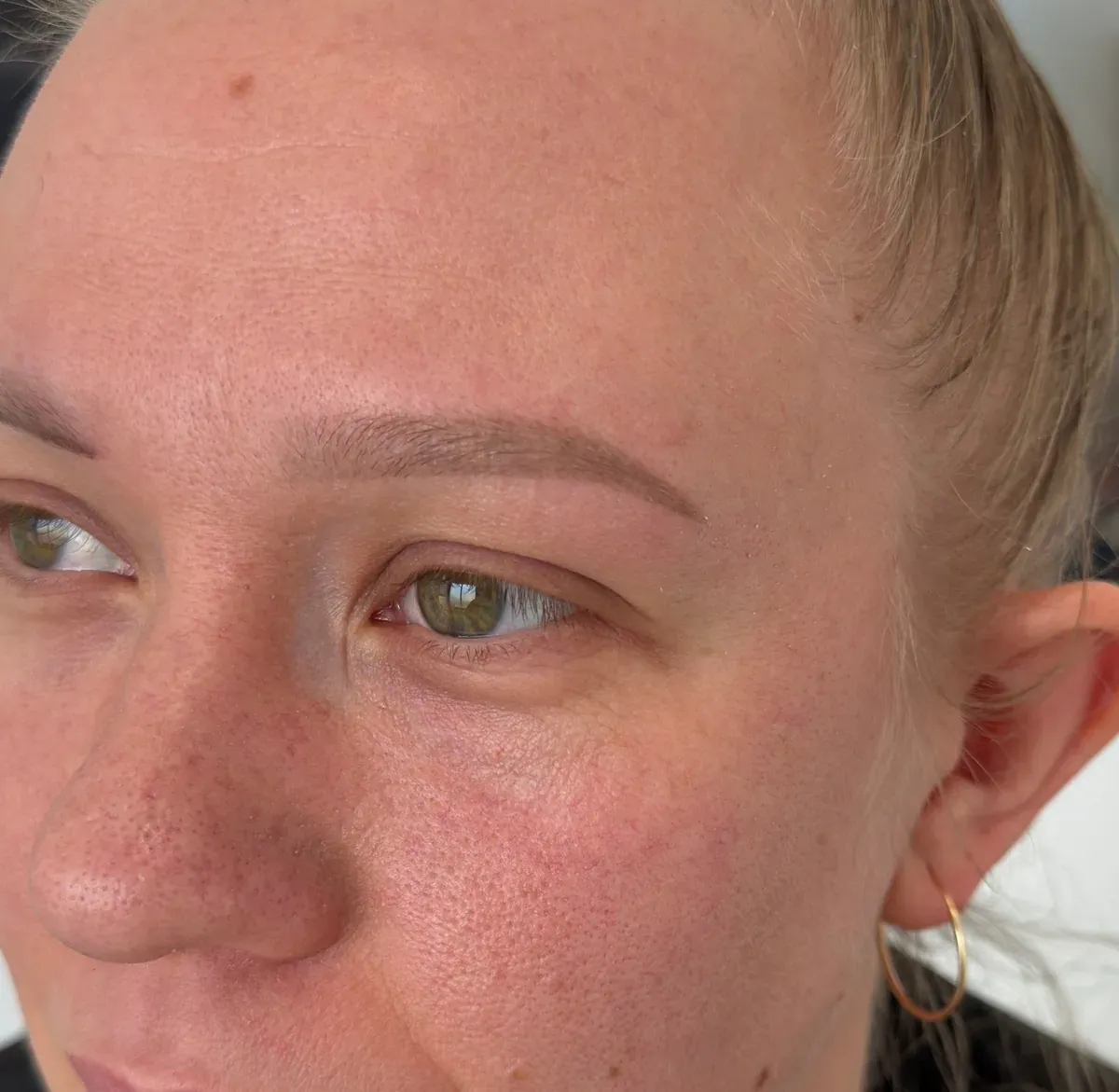
- Post your results on social media, and above all your healed results.
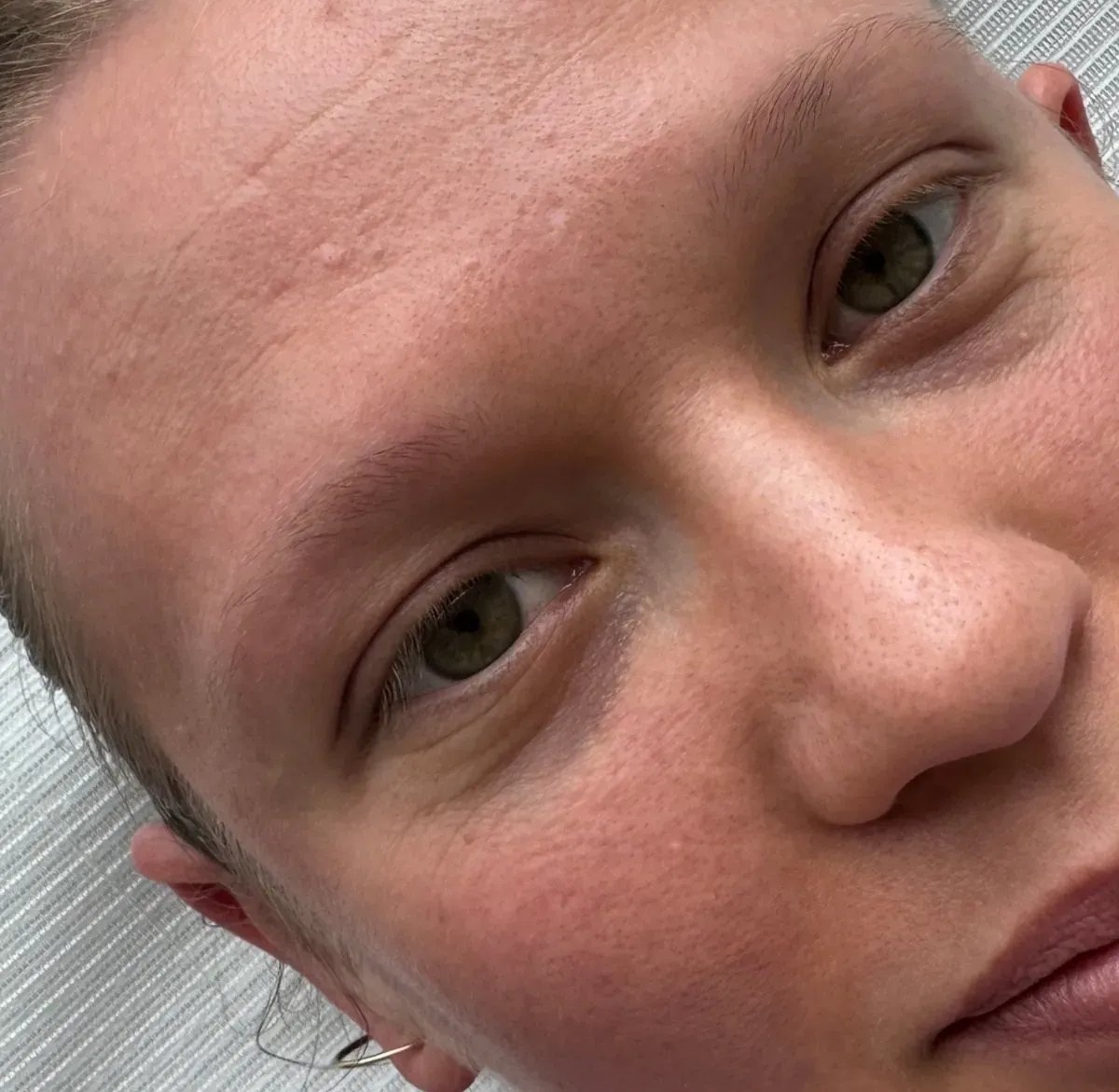
- Take photos in natural light: before, right after, healed.
- Take care of how you welcome clients and follow up: word of mouth does the rest.
The health questionnaire
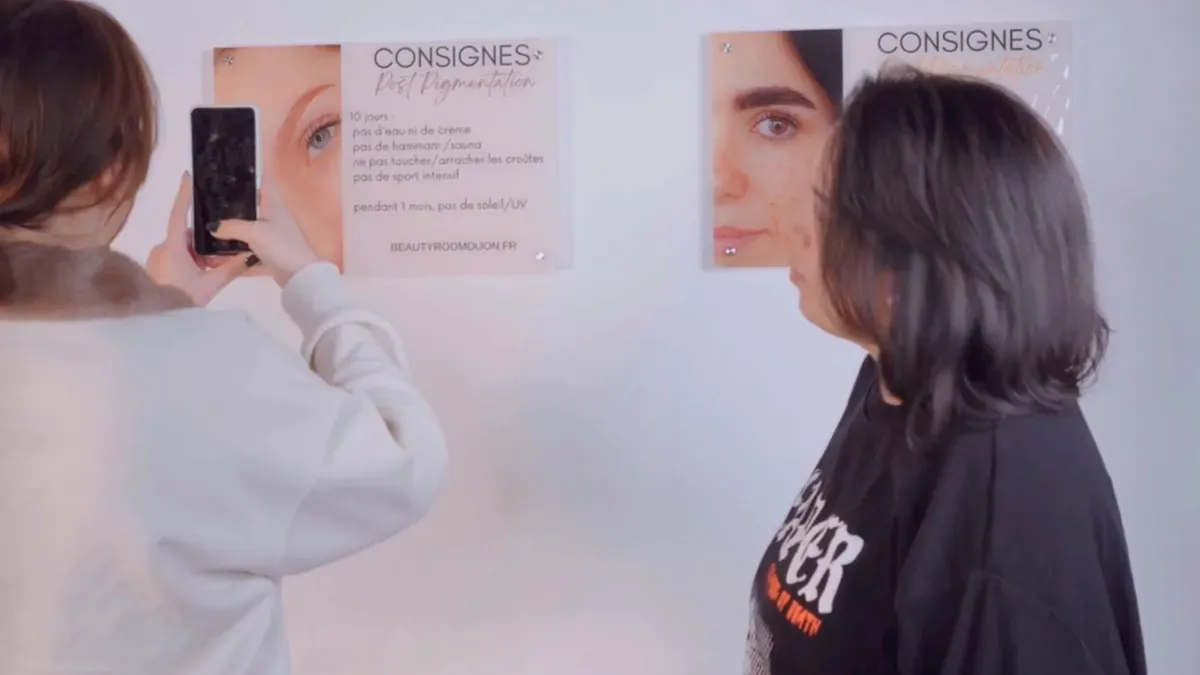
Before every session, the PMU artist asks about the client's health, treatments and medical conditions, to check whether permanent makeup is safe for her. She also explains the healing instructions, and gives them to her in writing.
Pitfalls to avoid when you're starting out
Watch out
Oversaturating the skin to get a visible result right away; following trends instead of the client's face; using pigments that change color; starting out without corrected exercises; being left alone with a question, with no trainer available.
Getting trained
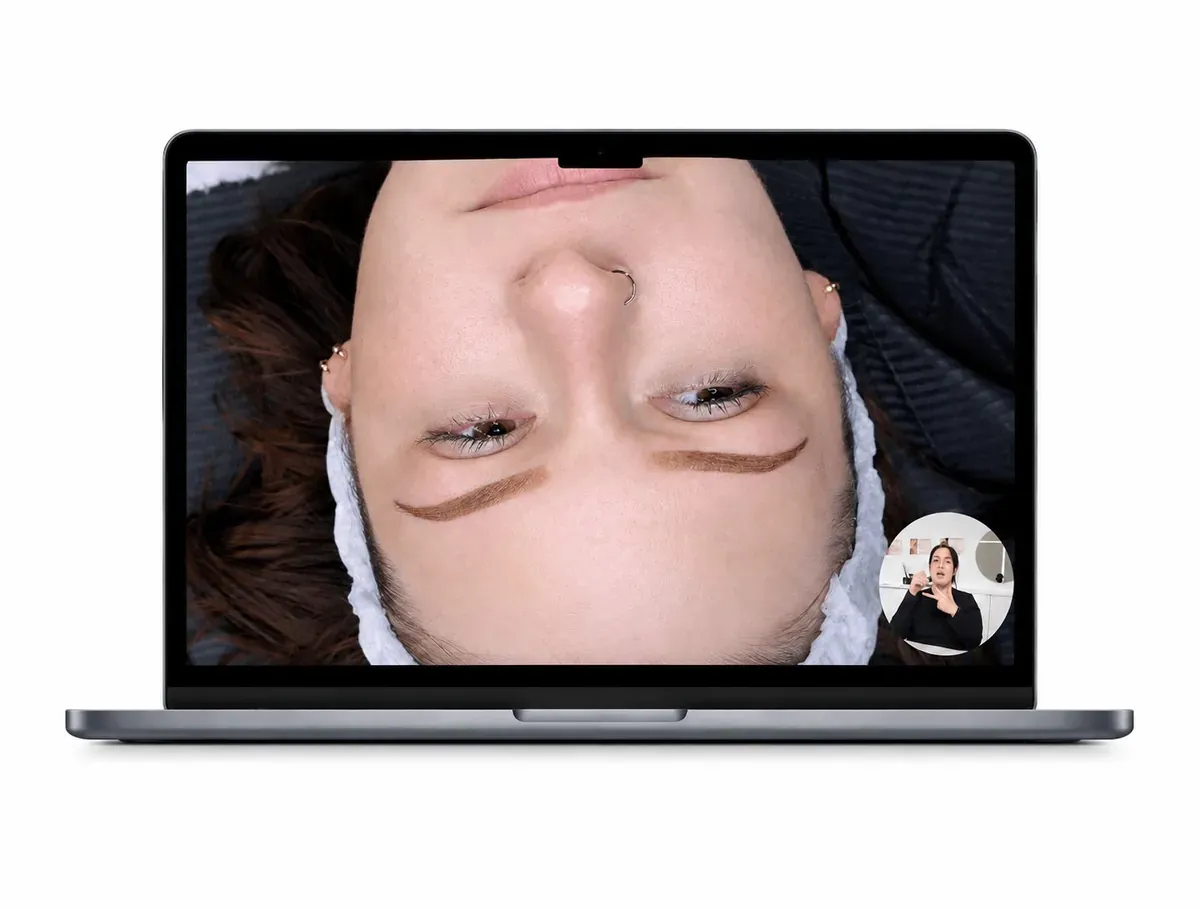
Good training teaches you the technique, but also skin types and color theory. And it supports you afterward, while you practice. Habiba, a PMU artist since 2019 and a trainer, offers three online courses: brows, lips and freckles (compare permanent makeup courses, online or in person).
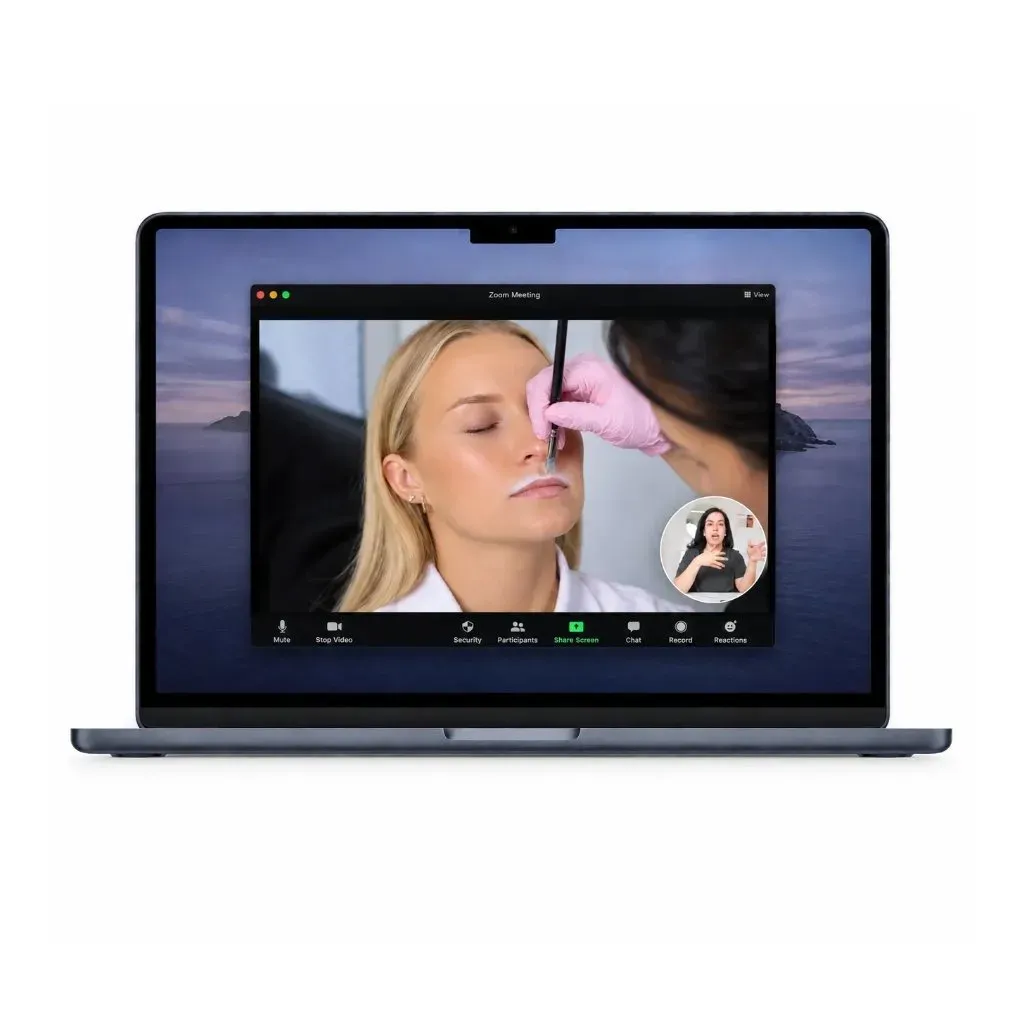
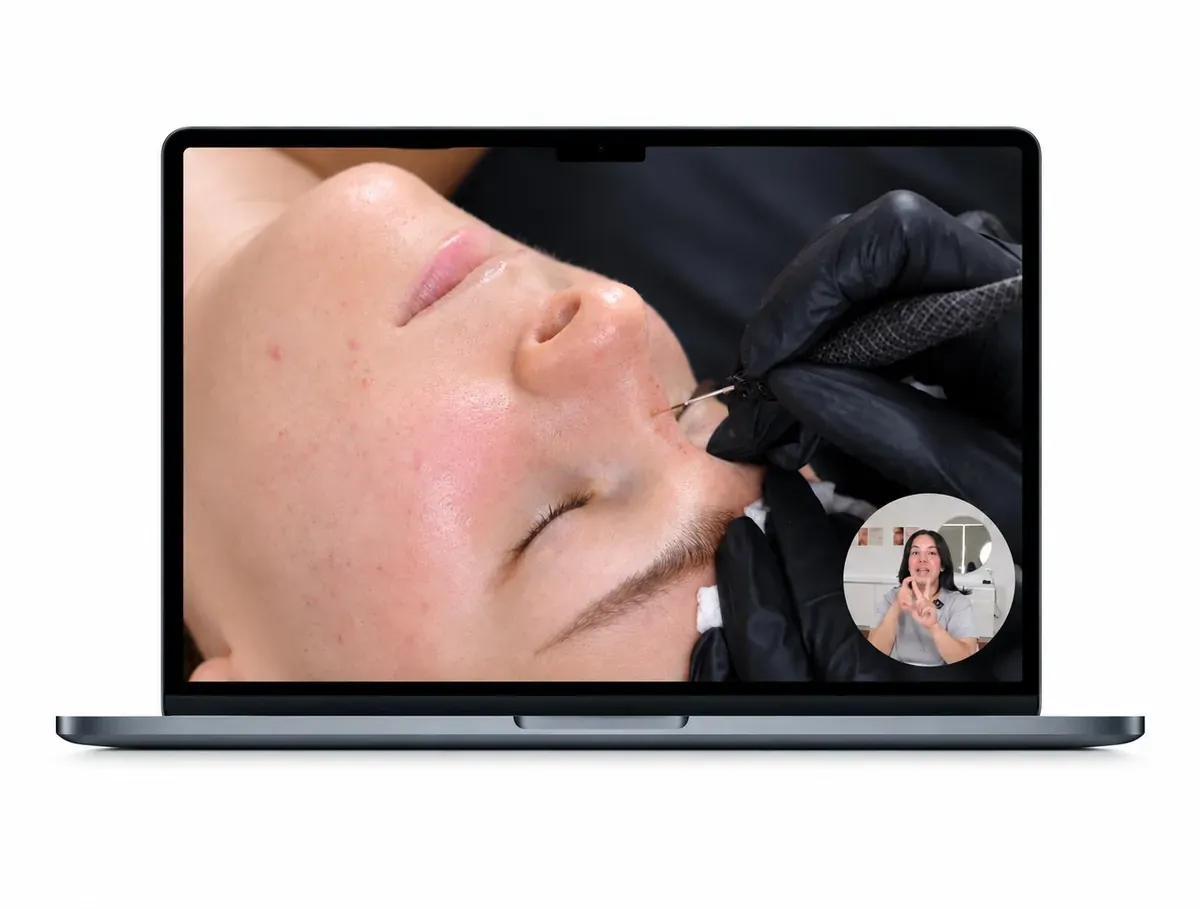
Ready to learn powder brows?
€290$329£249CHF 279CA$469A$469NZ$589SGD 419AED 1,199R$1,629MX$5,869COP 1,043,990CLP 317,990PEN 1,129MAD 3,259F CFA 190,990FCFA 190,990CFPF 34,990
VAT not applicable, Art. L. 223-3 of the French Tax Code on Goods and Services (CIBS)
Payment in instalments available.
- 5 videos with a real demonstration on a model
- Unlimited support on WhatsApp, 7 days a week
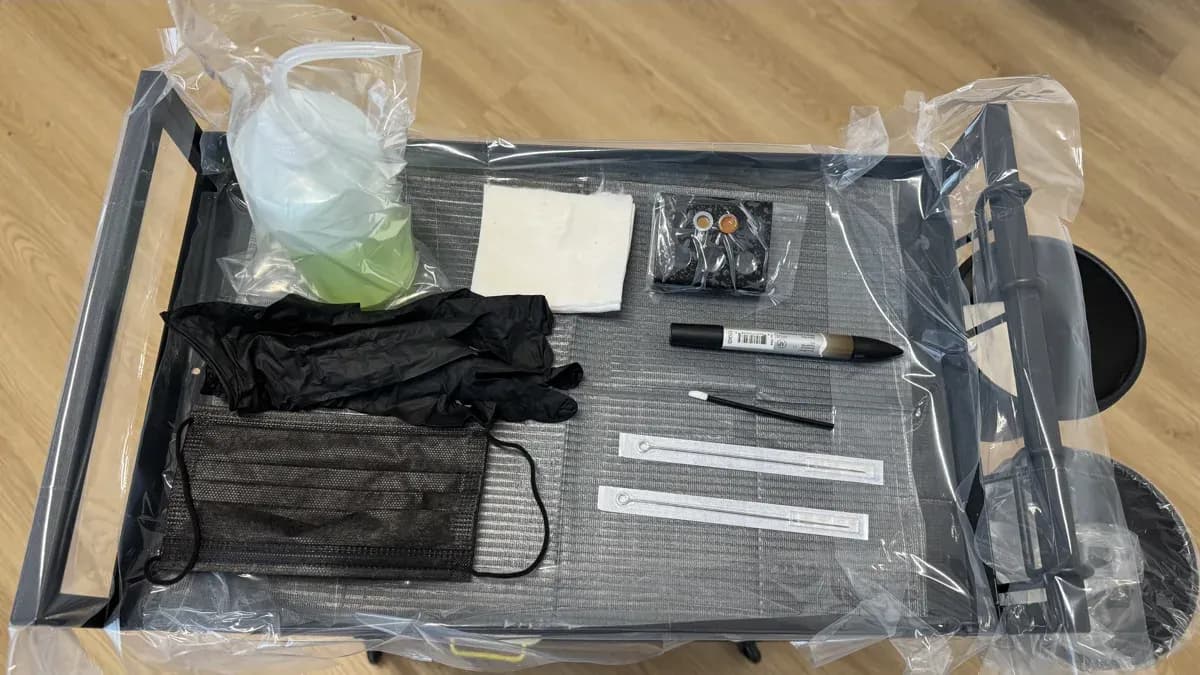
- Downloadable summary PDF and equipment list
- 3 practical exercises to hand in
- Lifetime access: updates and future bonus videos included
Frequently asked questions
No: there are simple, repeatable drawing methods.
With serious practice, you can get started in 1 to 2 months.
With the one you like most. Freckles and powder brows are often a good place to start.
It depends on your prices, your time, your number of clients and your expenses: there's no single figure.
They depend on your country: find out what's allowed where you live.
Yes, practicing on latex is the first step before your first models.

Written by
Habiba Med
Permanent makeup artist since 2019 and trainer, I share what I see every day in my studio to help you make the right choices.