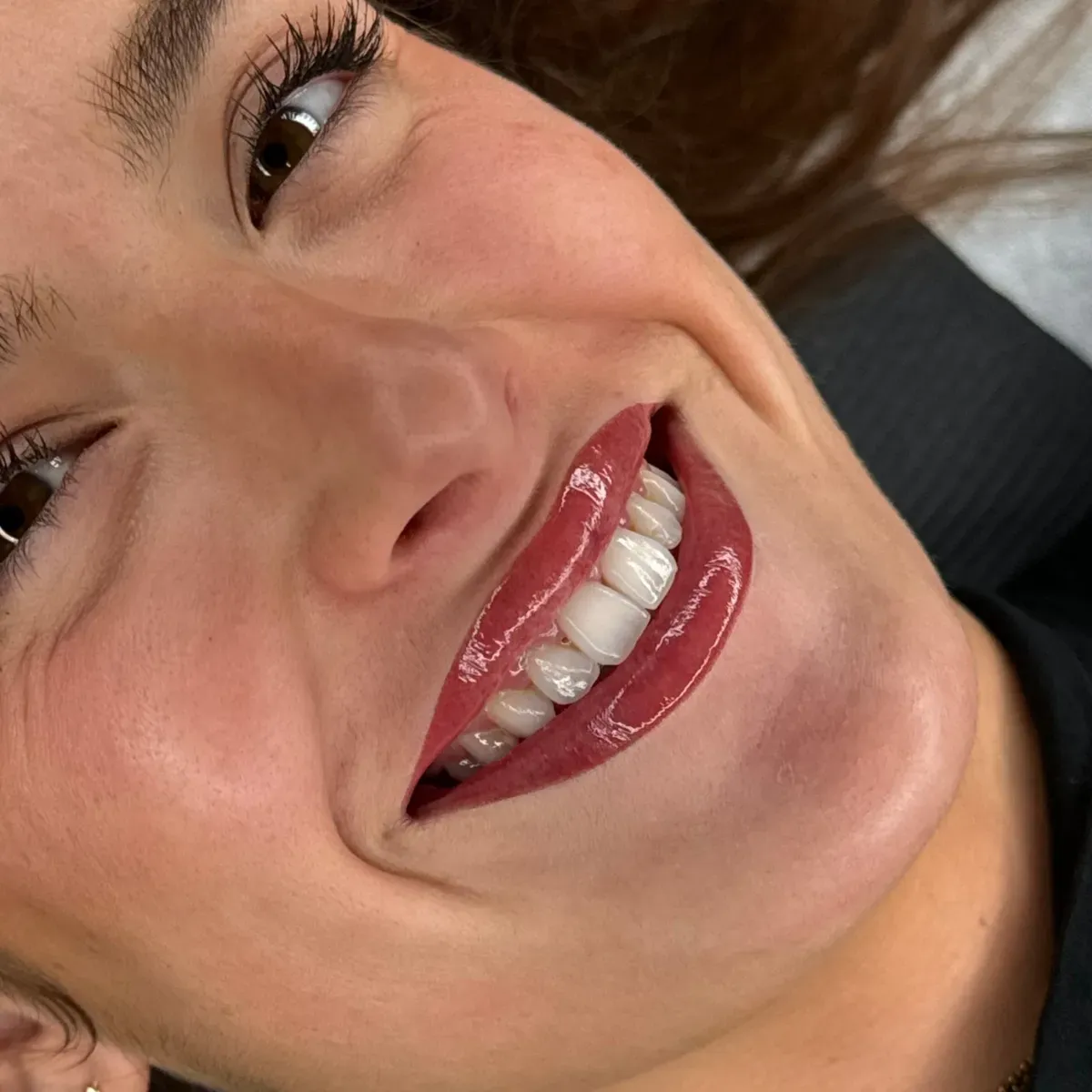
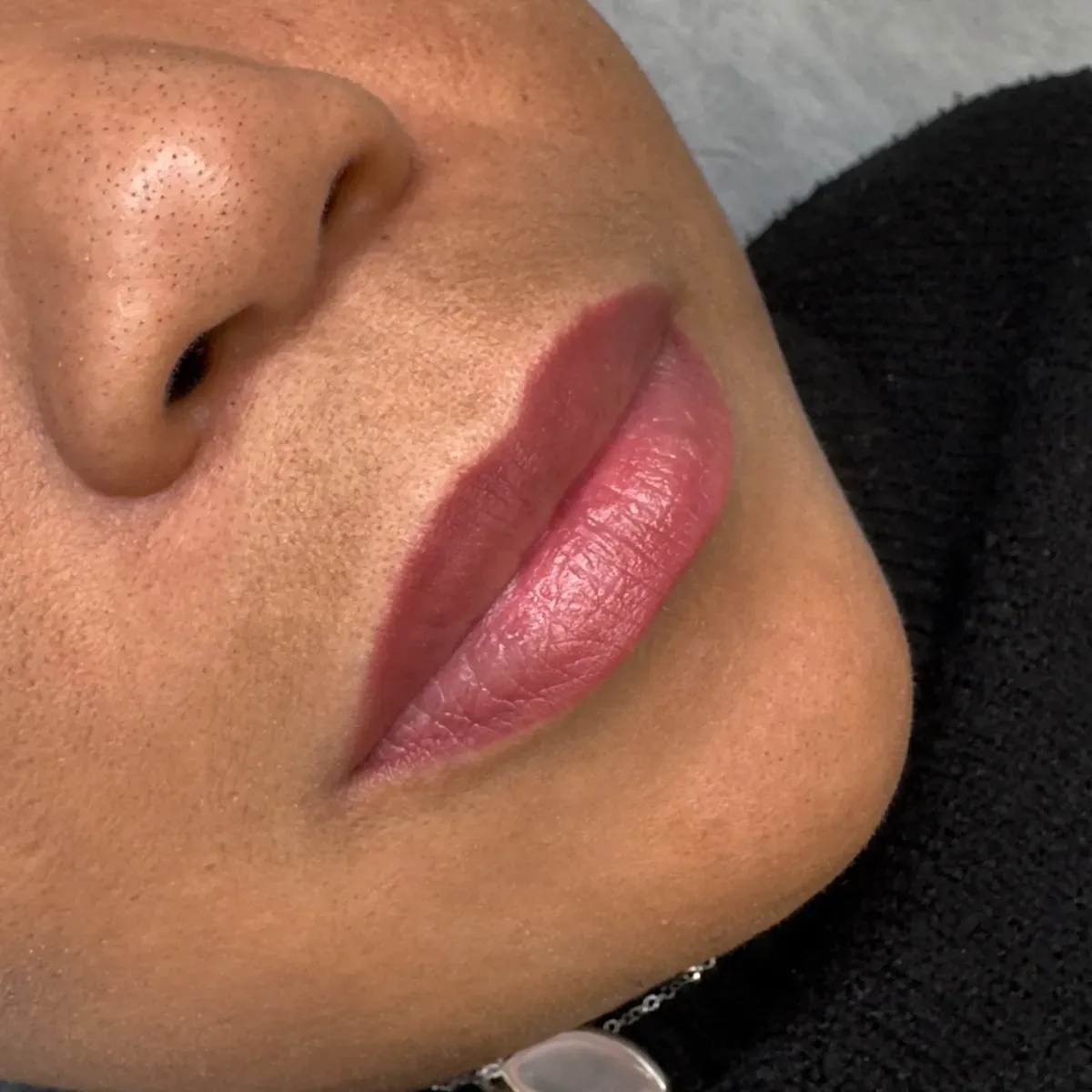
Habiba Med
Want more colorful, better-defined lips, or lighter lips if yours are dark? Search for permanent makeup lips online and you'll find tons of names, but in reality there are only two techniques to add color, and one to lighten. Here's everything you need to know before you book.
Key takeaways
- Lip blush, candy lips, BB lips, watercolor, velvet…: they're all the same thing. Only the intensity changes.
- Two techniques to add color: full lip color and ombré. One to lighten: neutralization.
- A lip tattoo adds color and definition, never volume.
- It lasts 3 to 4 years on average. If you have a cold sore outbreak, the appointment is postponed.
What is permanent lip makeup?
It's a light tattoo that deposits color into the lip. It fades over time: by 80% after 3 to 4 years on average, until it disappears completely. It has two possible goals:
- Adding color and redefining the shape of the lip.
- Correcting the color of the lip when it's dark: that's neutralization.
What lip blush does
- Definition
- A better lip shape
- More color
- Or less color (dark lips)
What lip blush doesn't do
- Add volume
Lip blush doesn't add any volume at all. The illusion of volume comes from contrast: when a lip is almost white and suddenly has color, you notice it much more. For real volume, you need filler from a doctor (lip blush vs lip filler).
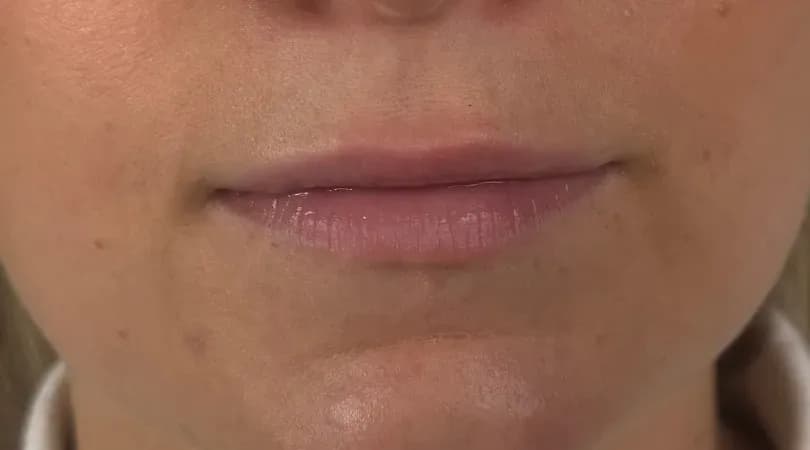
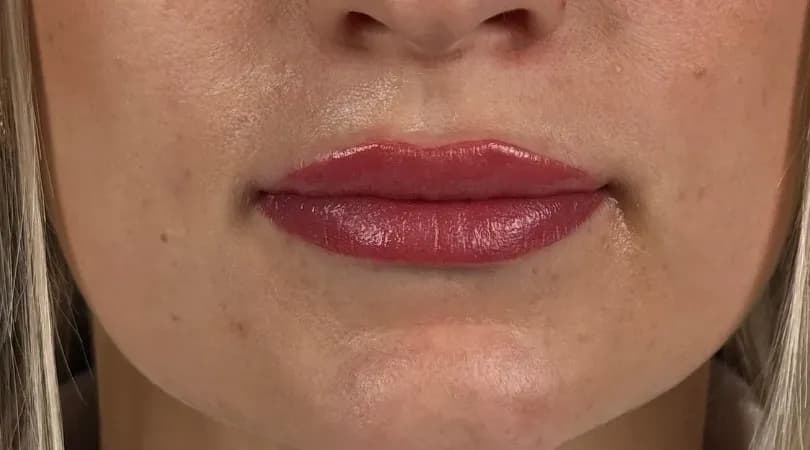
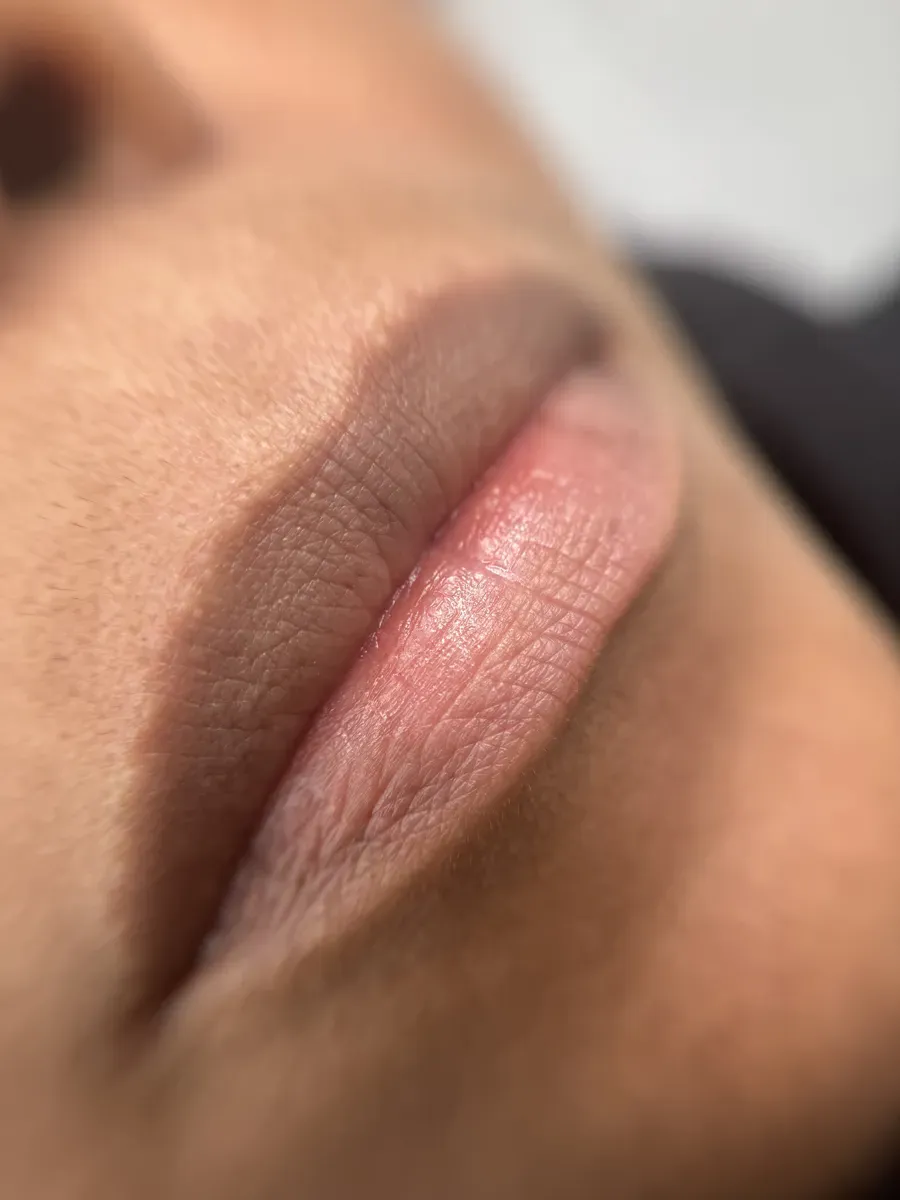
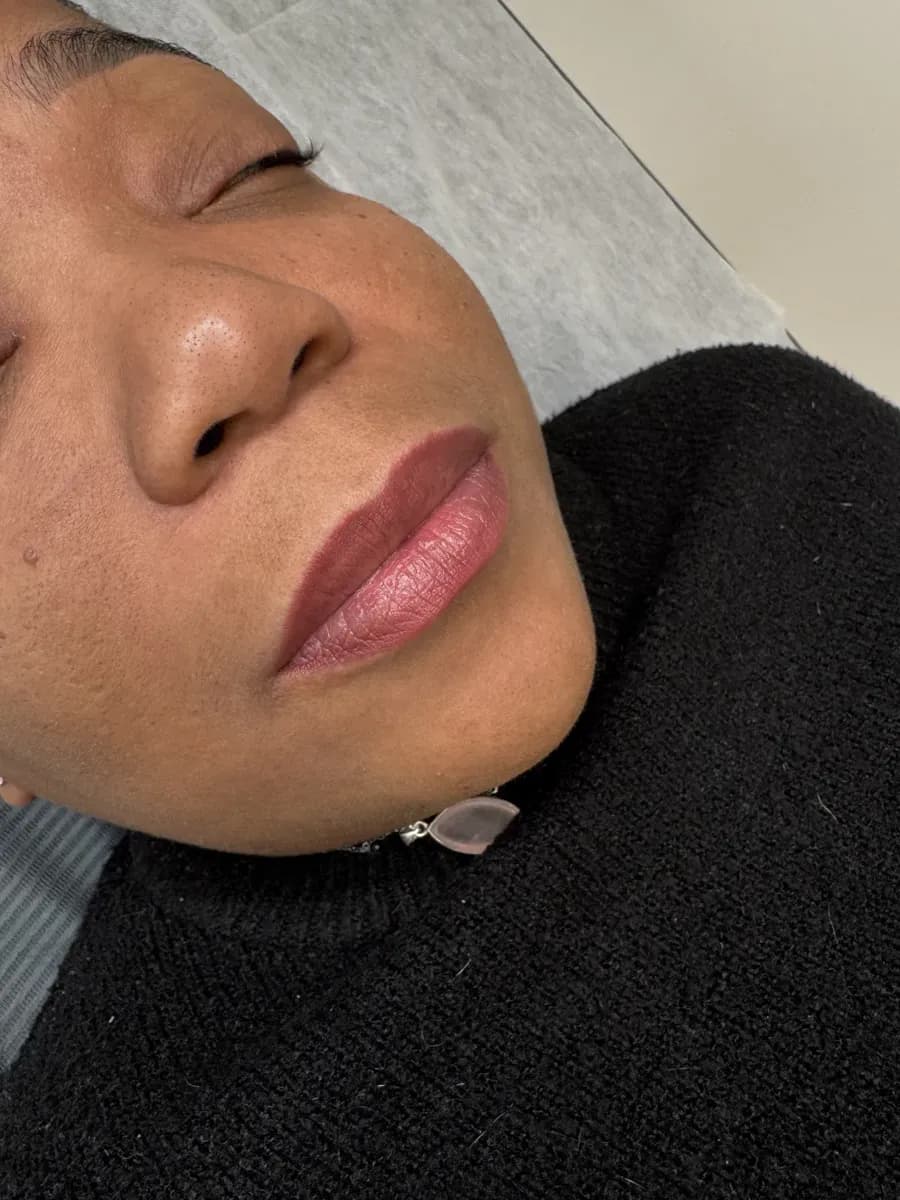
Right after the session
Lips can swell, especially thin lips, and after neutralization (a longer session). This swelling goes down fast: it's not the final result.
One tattoo, two techniques
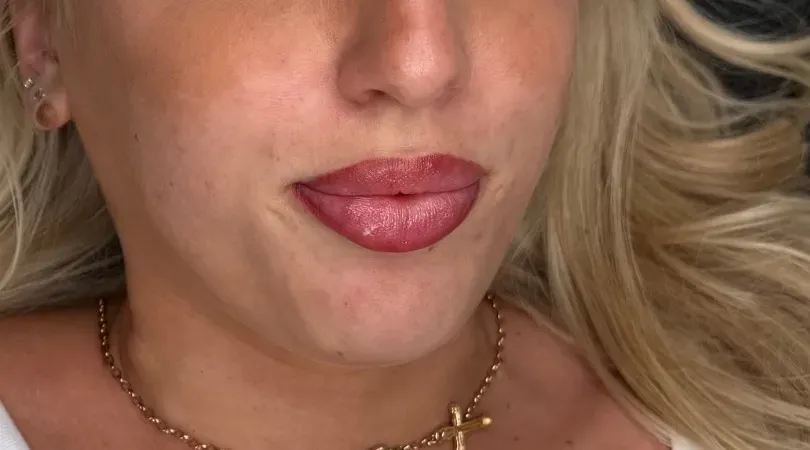
Online, you'll find tons of names: lip blush, candy lips, BB lips, velvet lips, watercolor lips… In reality, it all comes from the same thing, the lip tattoo, and there are only two techniques. All these names fall under one or the other:
Full lip color
The whole lip is filled in, with the same intensity everywhere.
- Lip blush
- Candy lips
- Blush lips
- Velvet lips
- BB lips
- Watercolor lips
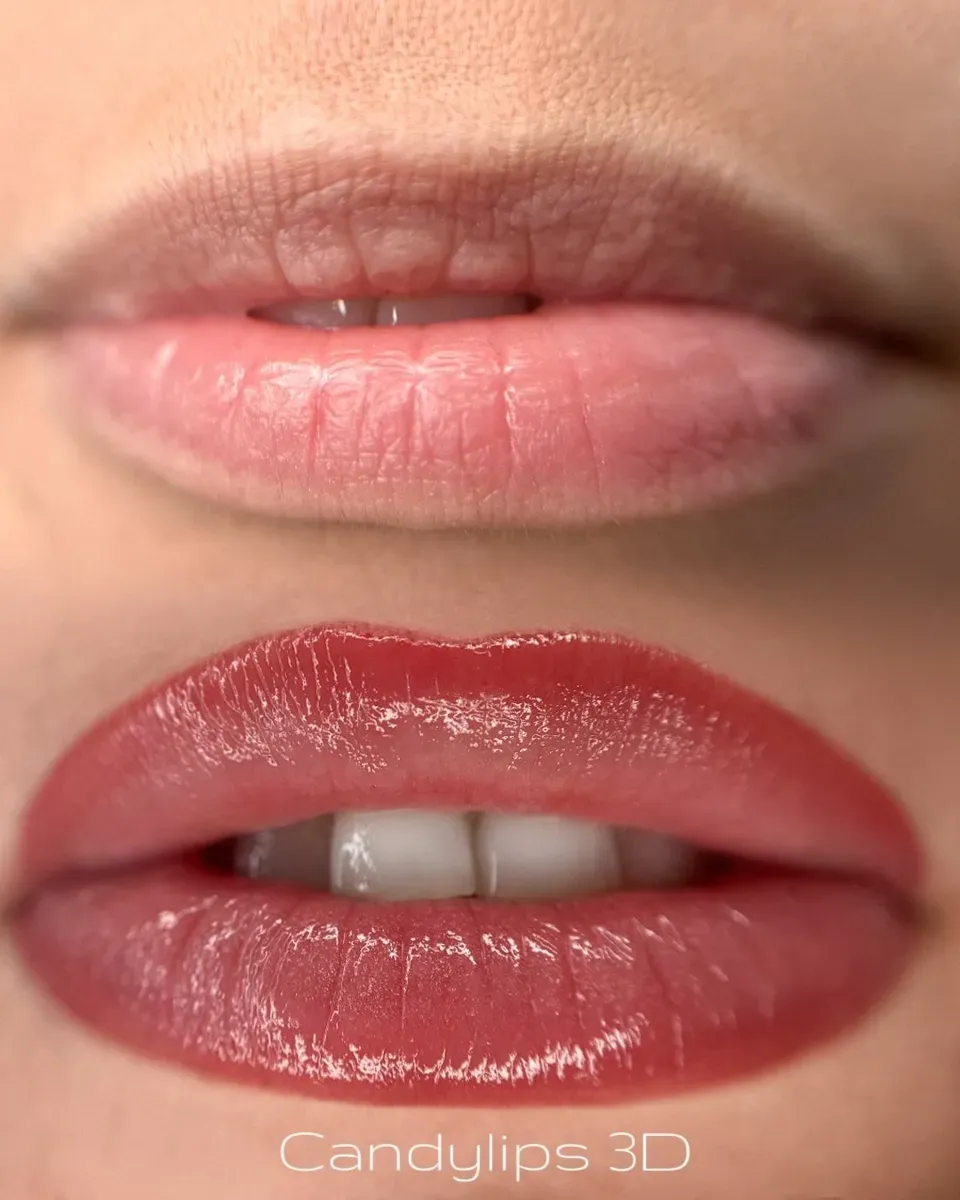
Ombré
The outline is darker, and the color gets lighter toward the center.
- Ombré lips
- 3D effect
- 3D lips
- Volume effect
- Gradient lips
And to correct a dark lip: neutralization (dark lips).
Many artists make up a name to turn it into their “signature.” It confuses clients and serves no purpose. What really changes is the technique (full lip color or ombré) and the intensity, which is adjusted with the number of passes and the pigment chosen.
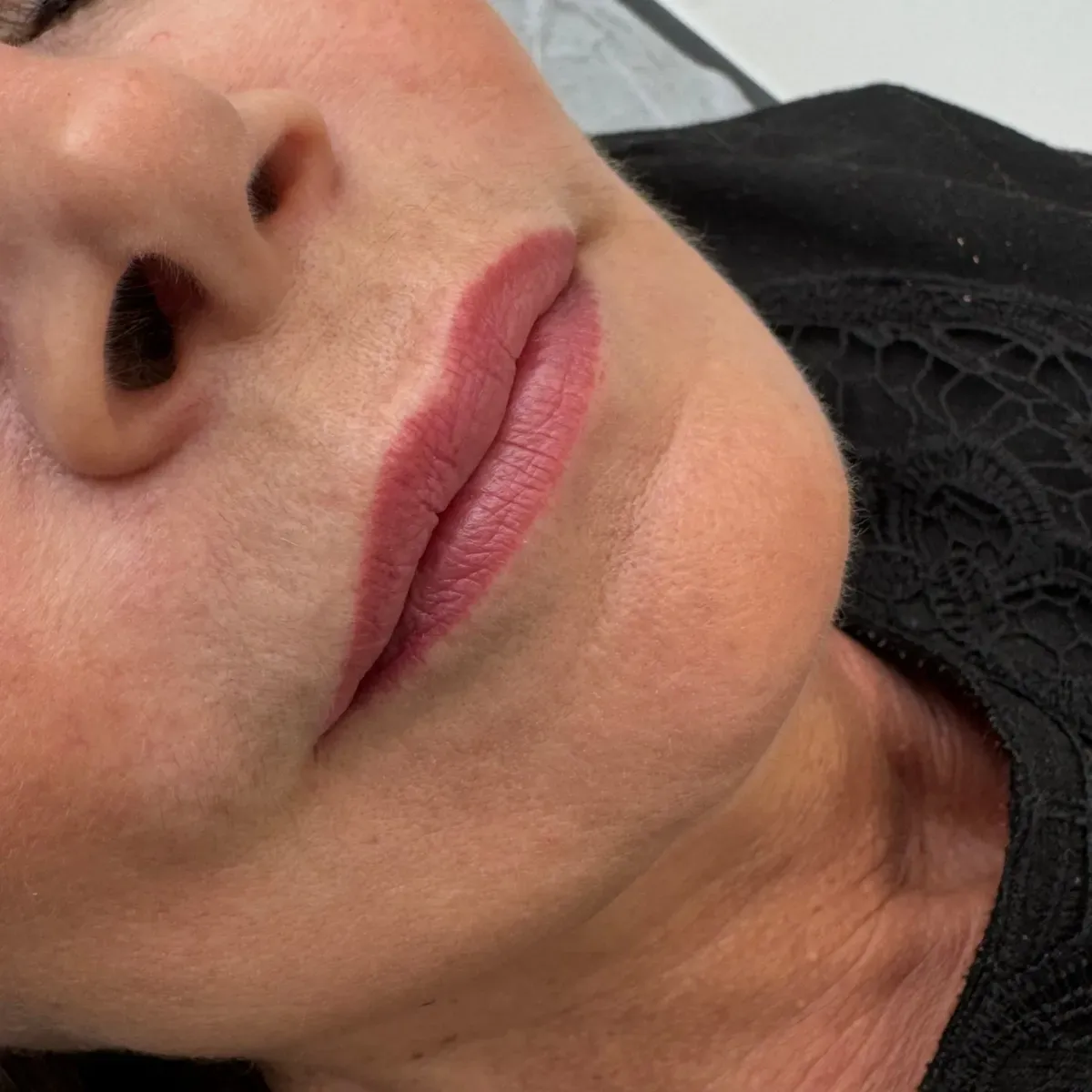
Full lip color (full lips)
The whole lip is filled in with the same intensity. At a soft intensity, it's a “my lips, but better” effect. At a bold intensity, it's a true lipstick effect. All the details in our guide to lip blush and full lip color.
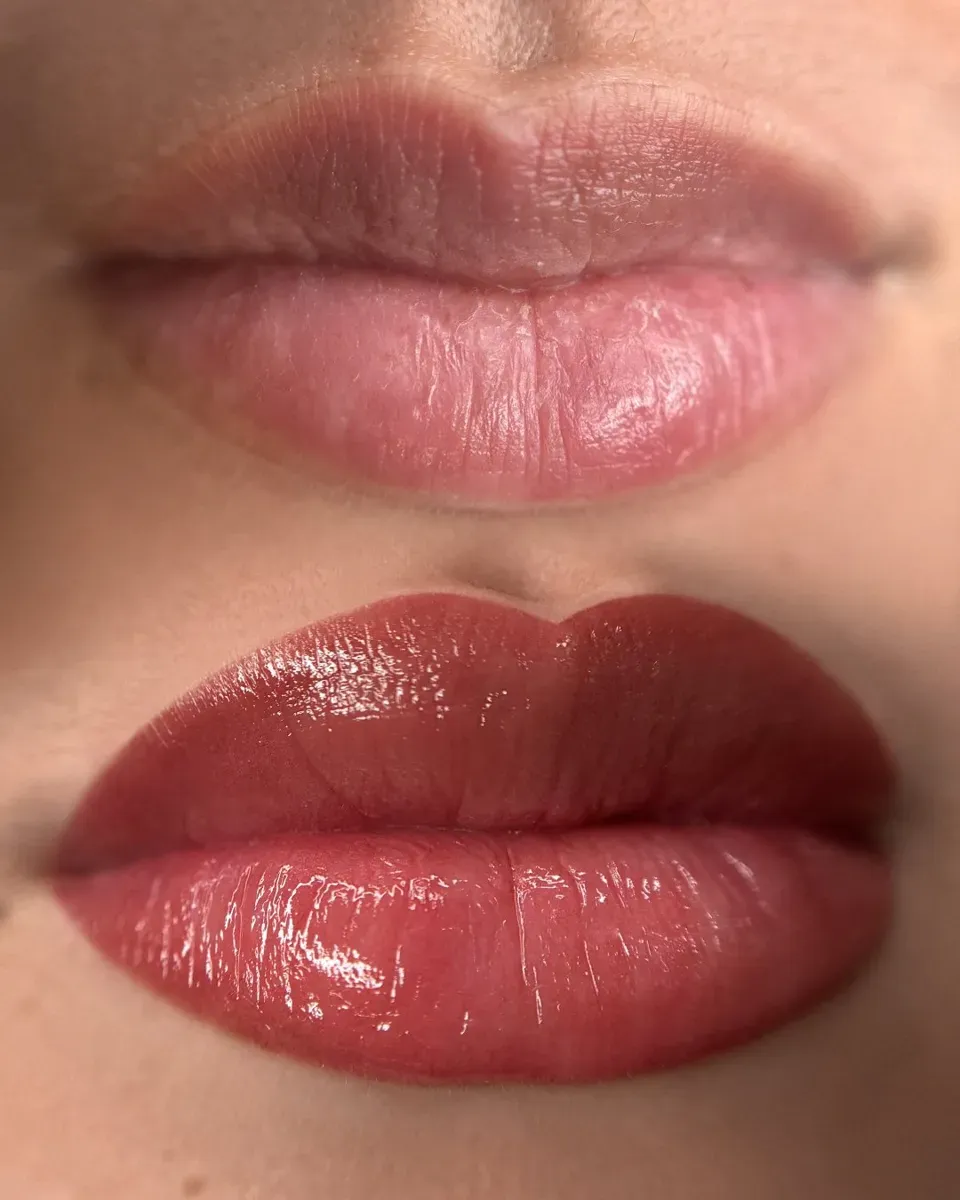
Ombré lips (3D effect)
The outline is a little darker, then the color gets lighter and lighter toward the inside of the lip. It adds dimension, without a “drawn line” look.
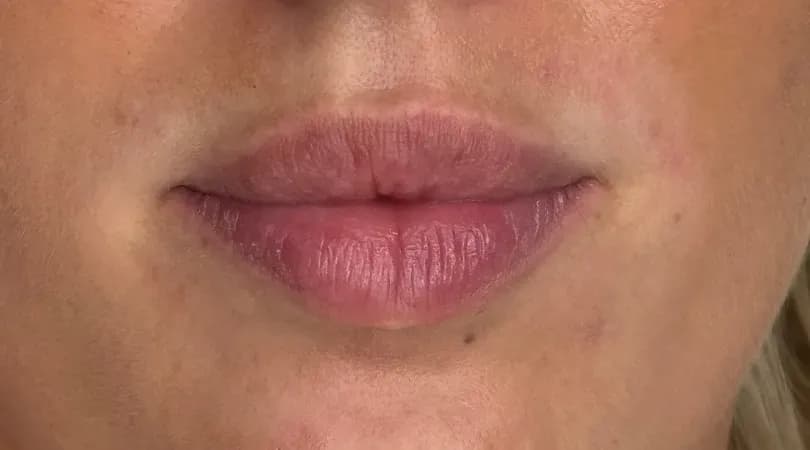
Lip neutralization (dark lips)
It's the opposite: instead of adding color, you correct the color of a dark or brown lip, so it goes back to nude, pastel or slightly pink. It often takes several sessions. All the details in our lip neutralization guide.
What about lip liner alone?
The brown lip liner trend comes back now and then, but it suits very few people, and demand has dropped a lot. Habiba doesn't do it. For mixed-race skin, she prefers 3D ombré lips with a thinner outline.
Which technique for your lips?
Each technique can suit everyone, or only certain types of lips. It all depends on the surface of your lips and their wrinkles:
| Your lips | Full lip color | Ombré |
|---|---|---|
| Smooth and full | Yes | Yes |
| Thick: very wrinkled, lots of creases and texture | Recommended | Less flattering: the gradient settles into the creases and wrinkles |
| Mature, with a very wrinkled outline (mustache area) | Recommended | Less flattering |
| Mature, with few wrinkles on the outline and the lip | Yes | Yes |
| Lots of filler: plump, smooth and full | Yes, in a very natural color | Yes, in a very natural color |
Lips with a lot of hyaluronic acid filler hold pigment really well: so you need to choose very, very natural colors.
Who is it for?
- Lips that are pale or colorless, or whose outline fades with age.
- Lips that are dark or two-toned: neutralization (how to fix dark lips).
- Men who want a subtle, healthy-looking effect (lip tattoo for men).
- It's not the right treatment if you're looking for volume.
Which color should you choose?
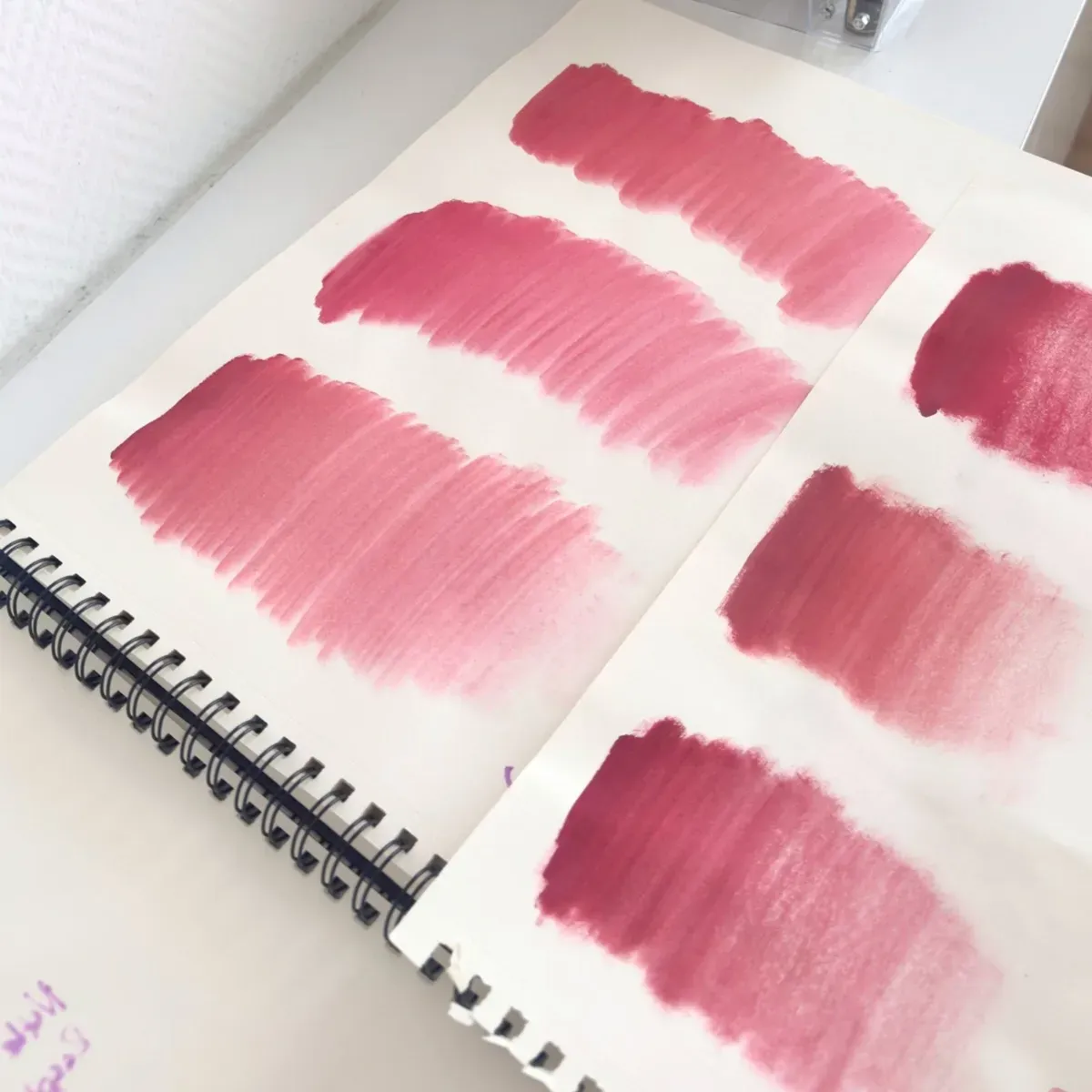
Your artist helps you choose, based on your natural lip color, your skin tone and what you like to wear. She shows you a color chart during the consultation, and can test the colors on your skin before starting.
| Shade family | The effect |
|---|---|
| Peach pink | Soft and luminous, very natural |
| Brownish pink | Nude effect, subtle for every day |
| Raspberry pink | Fresh, a real healthy glow |
| Magenta pink | Brighter, more made-up |
| Plum pink | Deep and elegant |
| Cherry red | The lipstick effect |
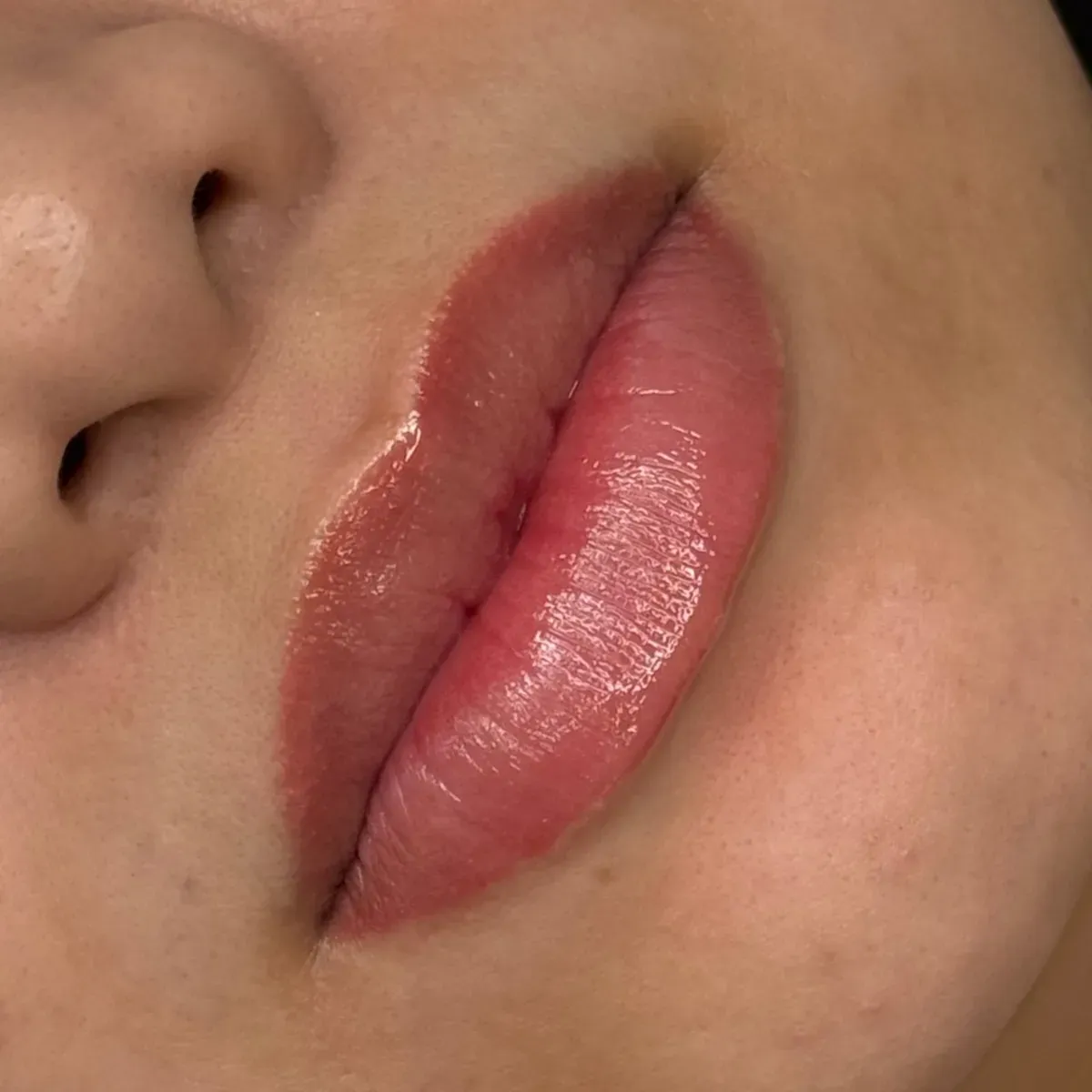
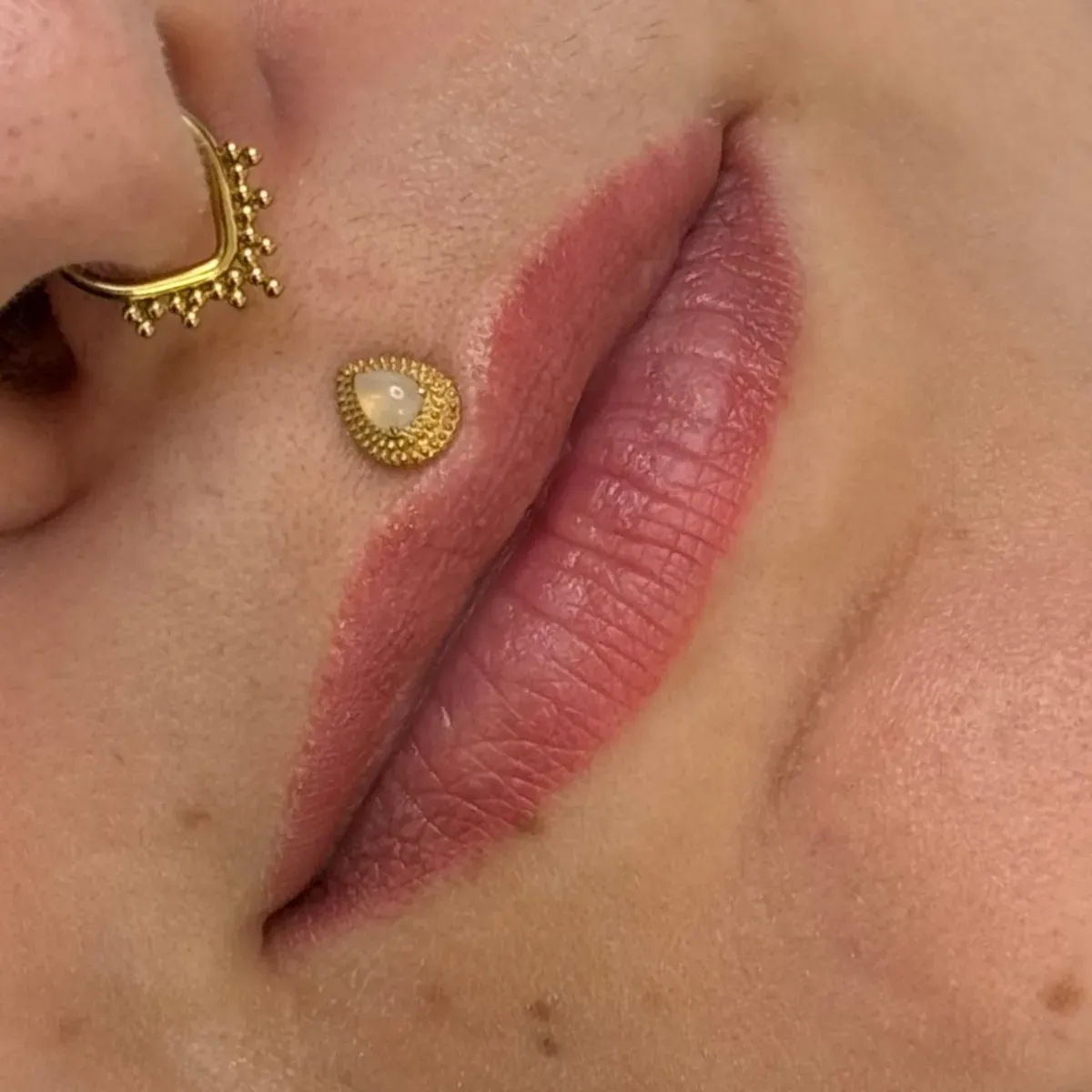
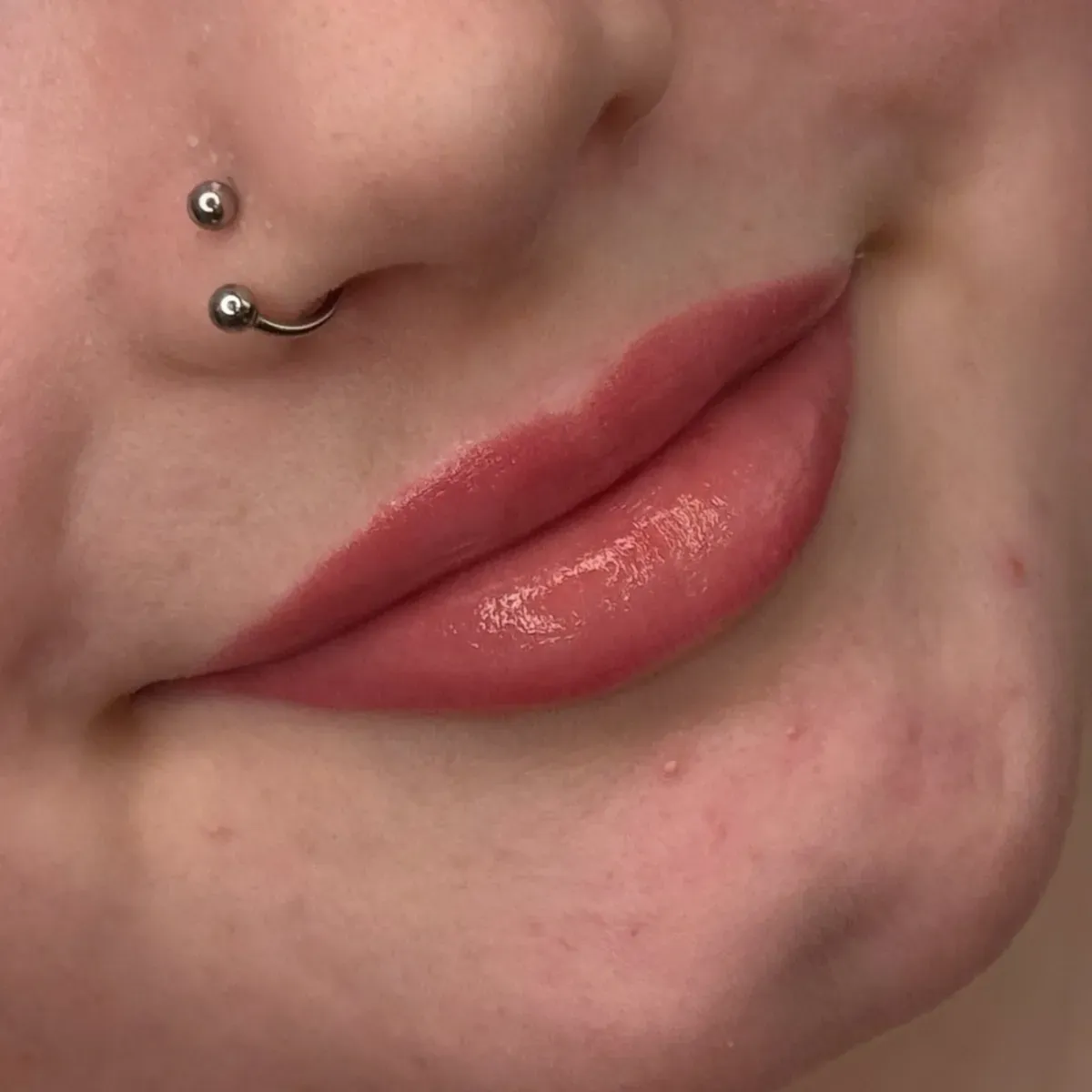
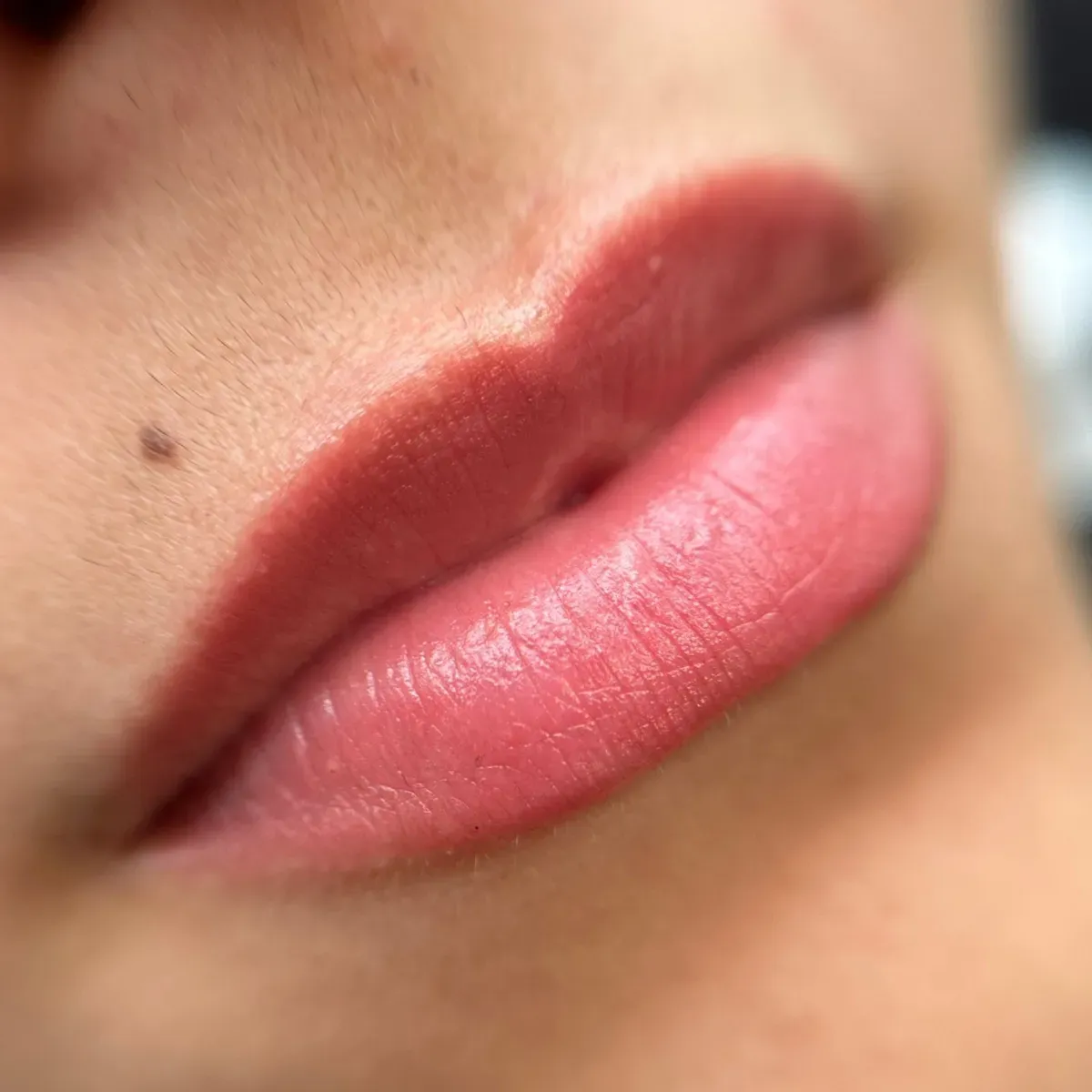
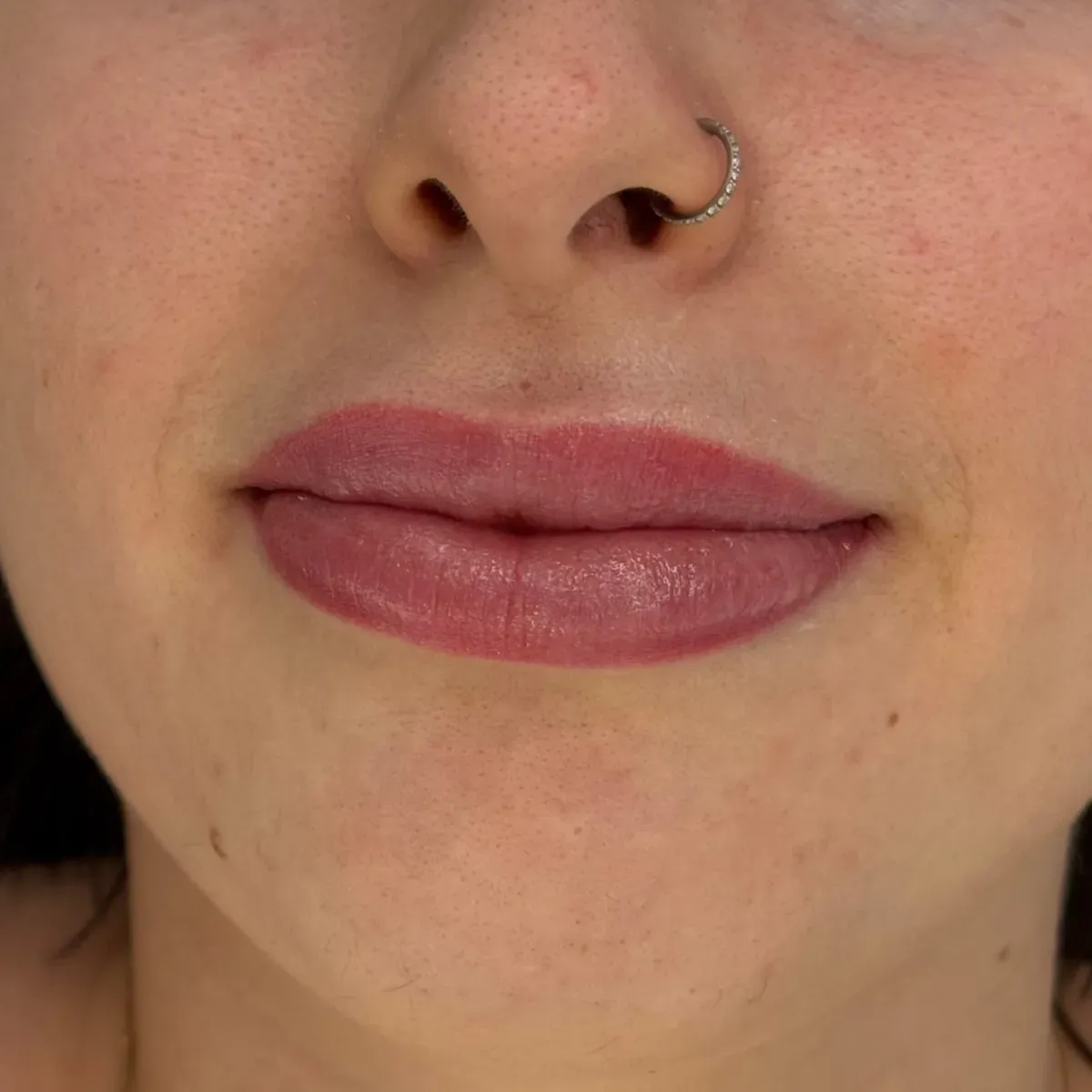
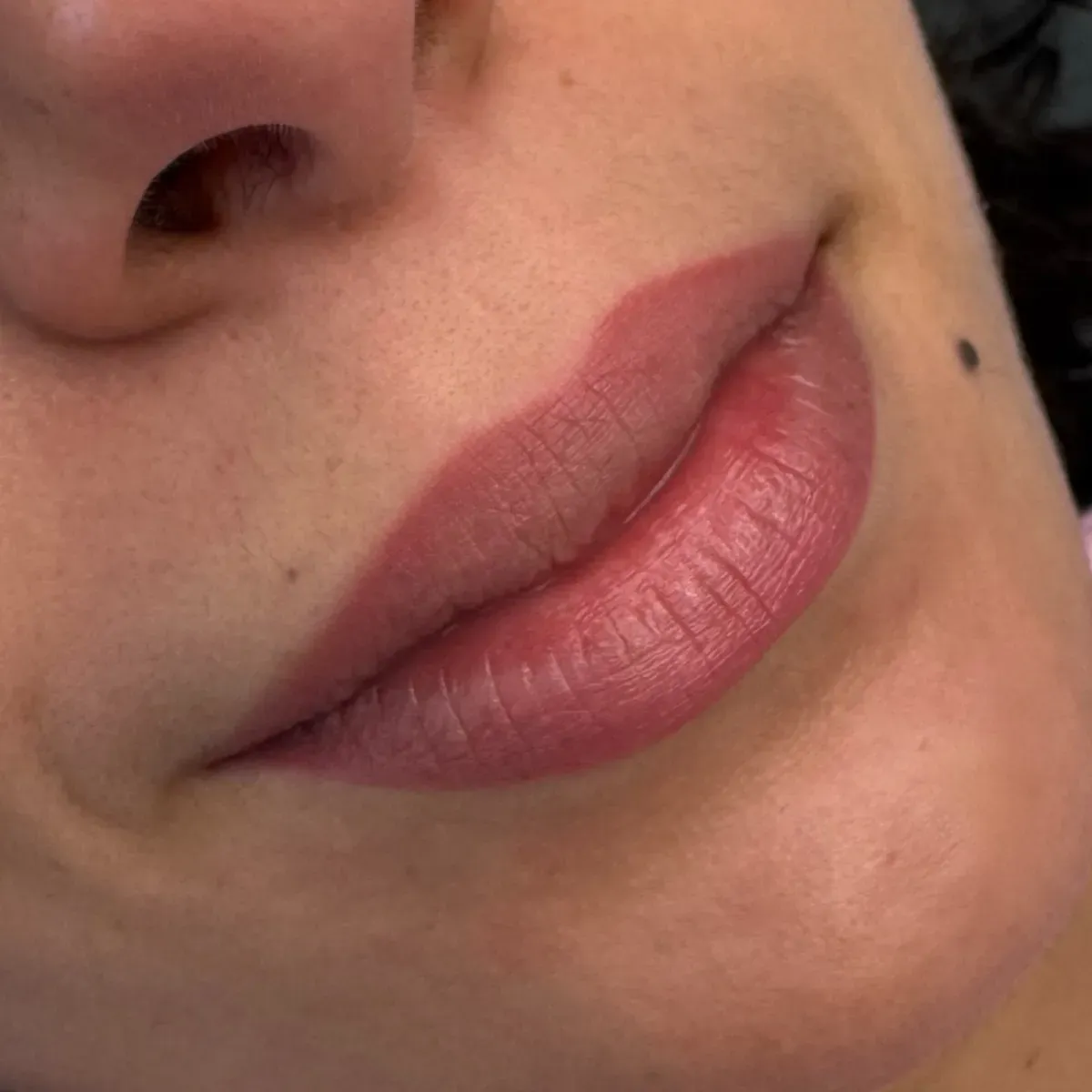
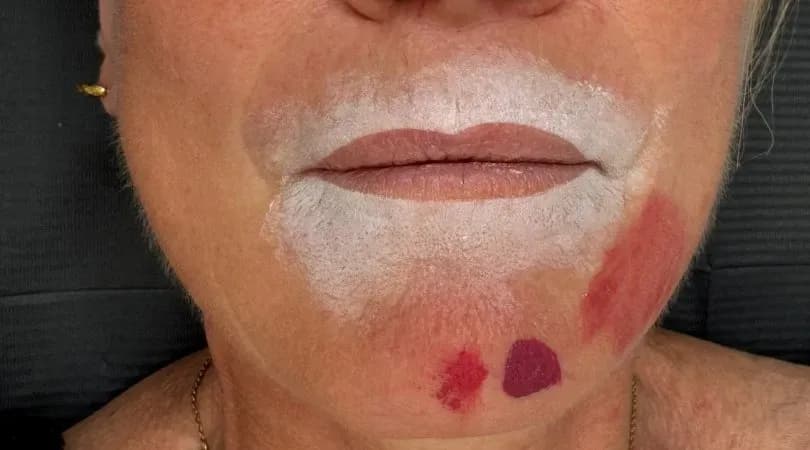
Right after the session, the color is always brighter: it softens during healing.
Trends: be careful
Very dark brown on fair skin: not recommended
It's trendy right now, but it ages badly and the color can shift. Above all, there's a real regret factor: seeing yourself every day, even without makeup, with a brown outline. There always comes a point when you get tired of it. It's not something you keep loving over time: better to do it with makeup.
Brown lips, gorgeous on the right skin
Brown lip blush is gorgeous on light mixed-race skin and on Black skin.
And if your lips have a lot of filler: choose a very natural color, because they hold pigment really well.
Contraindications
They're the same as for other treatments: pregnancy and breastfeeding, isotretinoin, blood thinners, uncontrolled diabetes, chemotherapy, skin in a flare-up. On top of that, for lips:
- Active cold sore (herpes) outbreak: the appointment is postponed.
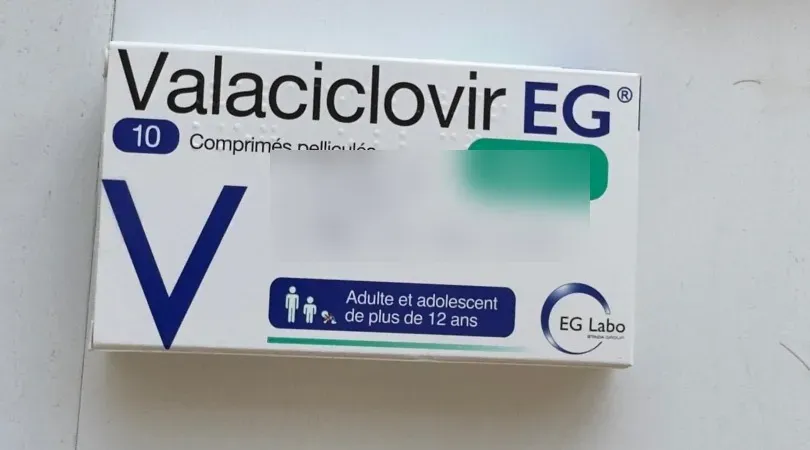
- Recurring cold sores: it's not a no. Plan a preventive treatment before the appointment, discussed with your doctor (an antiviral or a pharmacy cream).
- Tendency to keloids on the face: tattooing not recommended.
- Hyaluronic acid filler: wait 8 weeks between the filler and the tattoo, in either order.
- Fordyce spots: not a problem. Tattooing is actually one of the few ways to camouflage them.
For any question about a medication or a treatment, ask your doctor or your artist: she should normally be well informed on the subject. And the preventive cold sore treatment is set up at an appointment with your doctor.
Why cold sores matter so much
Tattooing is stressful for the body, which can react with a cold sore outbreak. It's painful and it can damage the work where the blisters appear. Hence the preventive treatment if you're prone to them.
Getting ready
- Moisturize your lips as much as possible: a thick layer of petroleum jelly every night, and a thin layer during the day.
- Exfoliate the day before: sugar and honey, a lip scrub, or a toothbrush gently brushed over your lips with a thin layer of petroleum jelly.
- Cold sores: take your preventive treatment before the appointment.
The appointment in 6 steps
The appointment often lasts about 3 hours. The goal: take the time to talk, choose the color and answer your questions. A tattoo is never rushed. Here are the 6 steps, from the drawing to the final result:
 1
The drawing
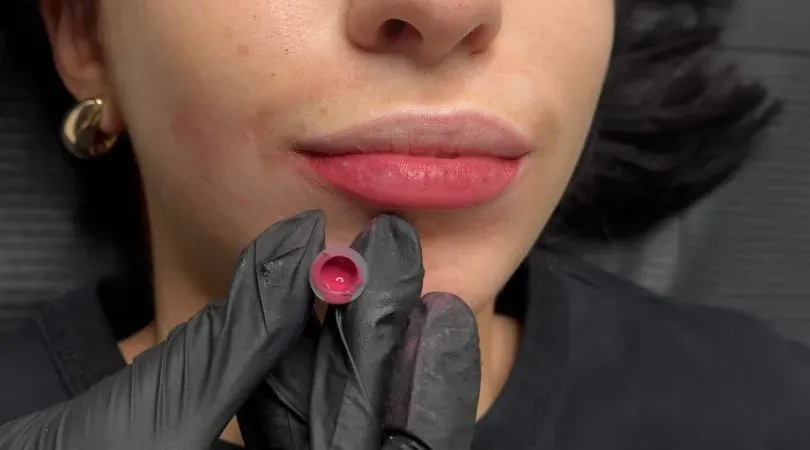
The artist draws the shape of your lips (this is called mapping), following your natural lip line. You approve the drawing in the mirror before anything else.
 2
Choosing the color
She shows you a color chart and can test the colors on your skin. She advises you based on your natural lip color, your skin tone and what you like to wear.
 3
Pigmentation
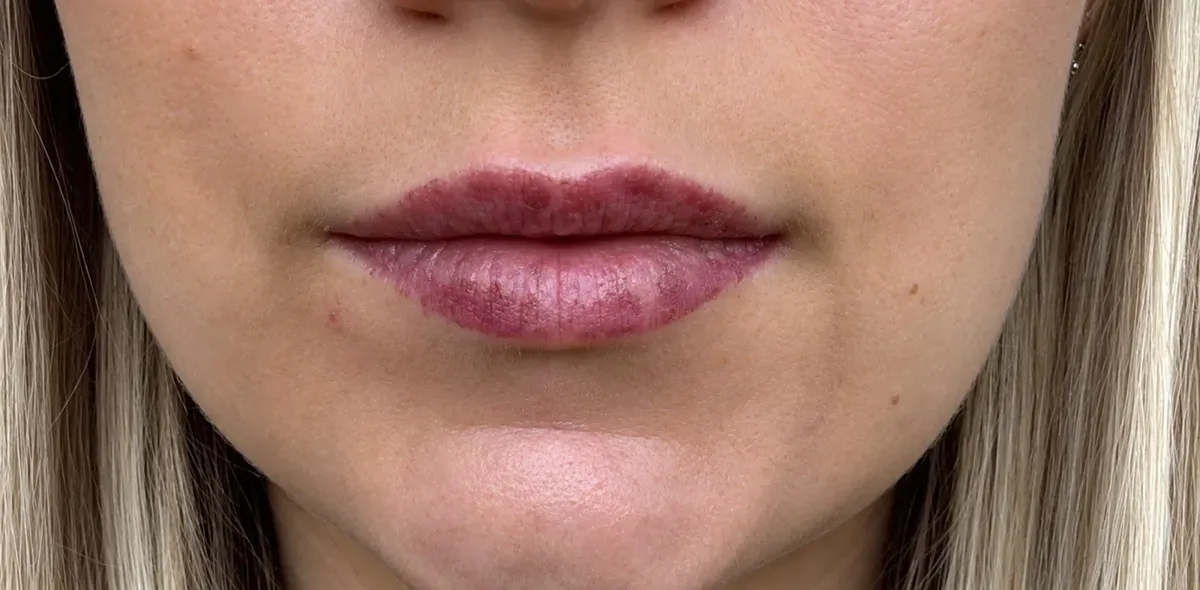
The artist glides over the lip without pushing in: you feel a scratching, then warmth. How long it takes depends on the technique, the size of the lip and how your skin reacts.
 4
Healing
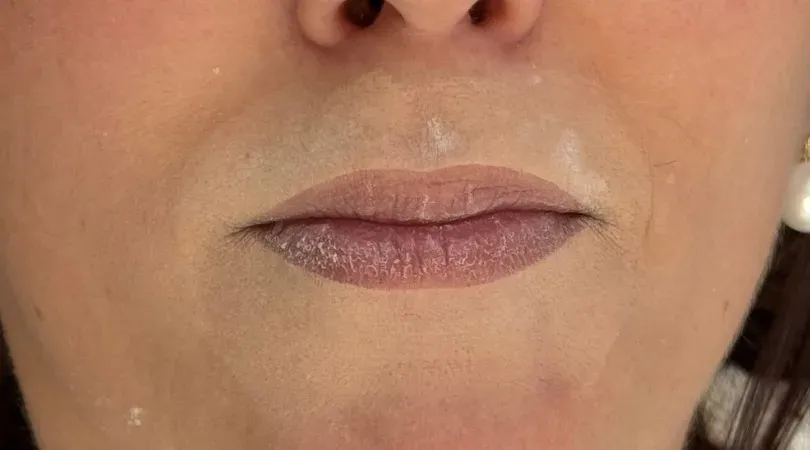
70% of the swelling goes down in 2 hours, the rest during the day; the lips peel for 3 to 5 days, then the color seems to disappear around day 5 before coming back.
 5
The touch-up
After 1.5 to 2 months, once the result is stable, a touch-up lets you adjust the color or small lighter areas, if needed.
 6
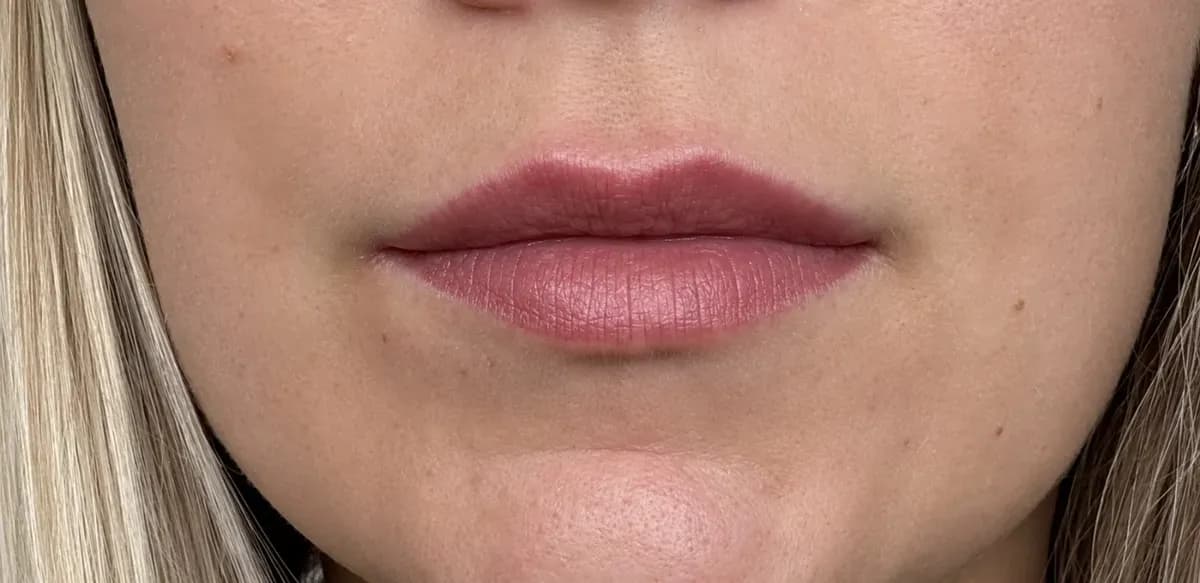
The final result
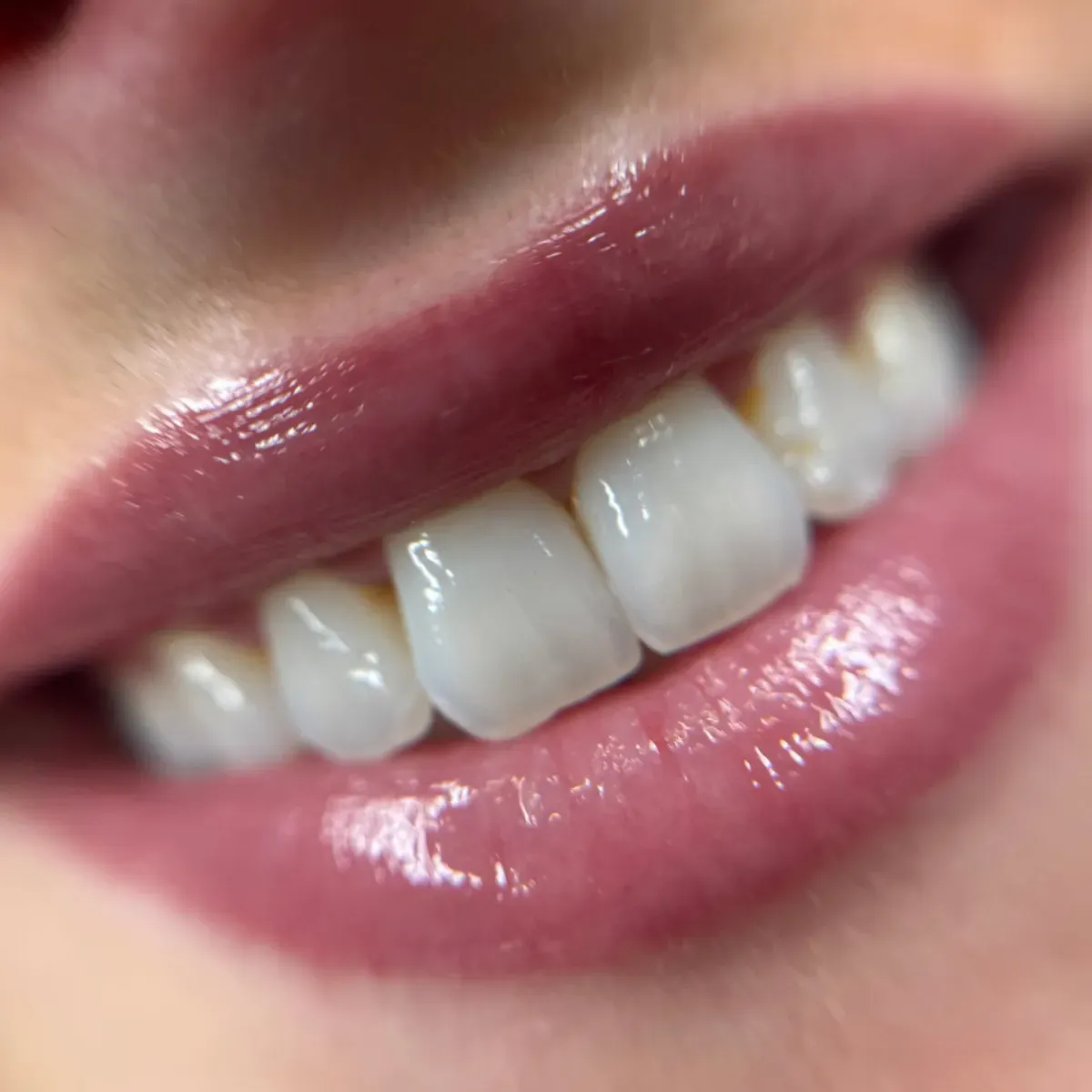
A soft, natural color that lasts 3 to 4 years on average. You can still wear lipstick and gloss on top.
Does a lip tattoo hurt?
It can seem scary, but it doesn't hurt. Pain is the artist's responsibility: there's no need to push the needle in, the skin is just lightly grazed. You feel a scratching, then it heats up as the session goes on, like a sunburn. Some artists use a numbing gel. Sensitivity can be stronger during your period.
After the session and how long it lasts
- Swelling goes down very quickly: about 70% in 2 hours, the rest during the day (up to 48 hours if the lips have a lot of hyaluronic acid).
- The lips peel for 3 to 5 days.
- Around day 5, the color seems to disappear: that's normal.
- The final result shows after 1.5 to 2 months. The touch-up is done at that point if needed.
- How long it lasts: 3 to 4 years on average. The more pigment the lip holds, the longer it lasts: at maximum intensity, the result can become almost permanent.
Once healed, you can wear lipstick, lip pencil or gloss on top. With gloss, you even get the most beautiful results. Details in the lip blush healing process, step by step and lip blush aftercare after your session.
Price, special cases and corrections
- Price and choosing your artist: our lip blush cost guide.
- Real results: our lip blush before and after photos.
- A result you're unhappy with: solutions for lip blush gone wrong.
- Training: how to choose a lip blush course.
Frequently asked questions
Yes. They're different names for the same thing: pigmenting the lip. Only the intensity changes.
No, it fades by 80% after 3 to 4 years on average, until it disappears completely. At a very bold intensity, it can become almost permanent.
Full lip color at a soft intensity (lip blush), or soft ombré lips.
No, never. It adds color and definition. For volume, you need filler from a doctor.
The same people as for other treatments (pregnancy and breastfeeding, isotretinoin, blood thinners, uncontrolled diabetes, chemotherapy, skin in a flare-up), plus an active cold sore outbreak: the appointment is postponed. Tendency to keloids on the face: not recommended.
Yes, outside of an outbreak, with a preventive treatment discussed with your doctor before the appointment.
No: it can seem scary, but you mostly feel a scratching and some warmth.
Plan on about 3 hours. A touch-up is possible after 1.5 to 2 months.
Yes, once healed: lipstick, lip pencil, gloss. With gloss, you even get the most beautiful results.

Written by
Habiba Med
Permanent makeup artist since 2019 and trainer, I share what I see every day in my studio to help you make the right choices.