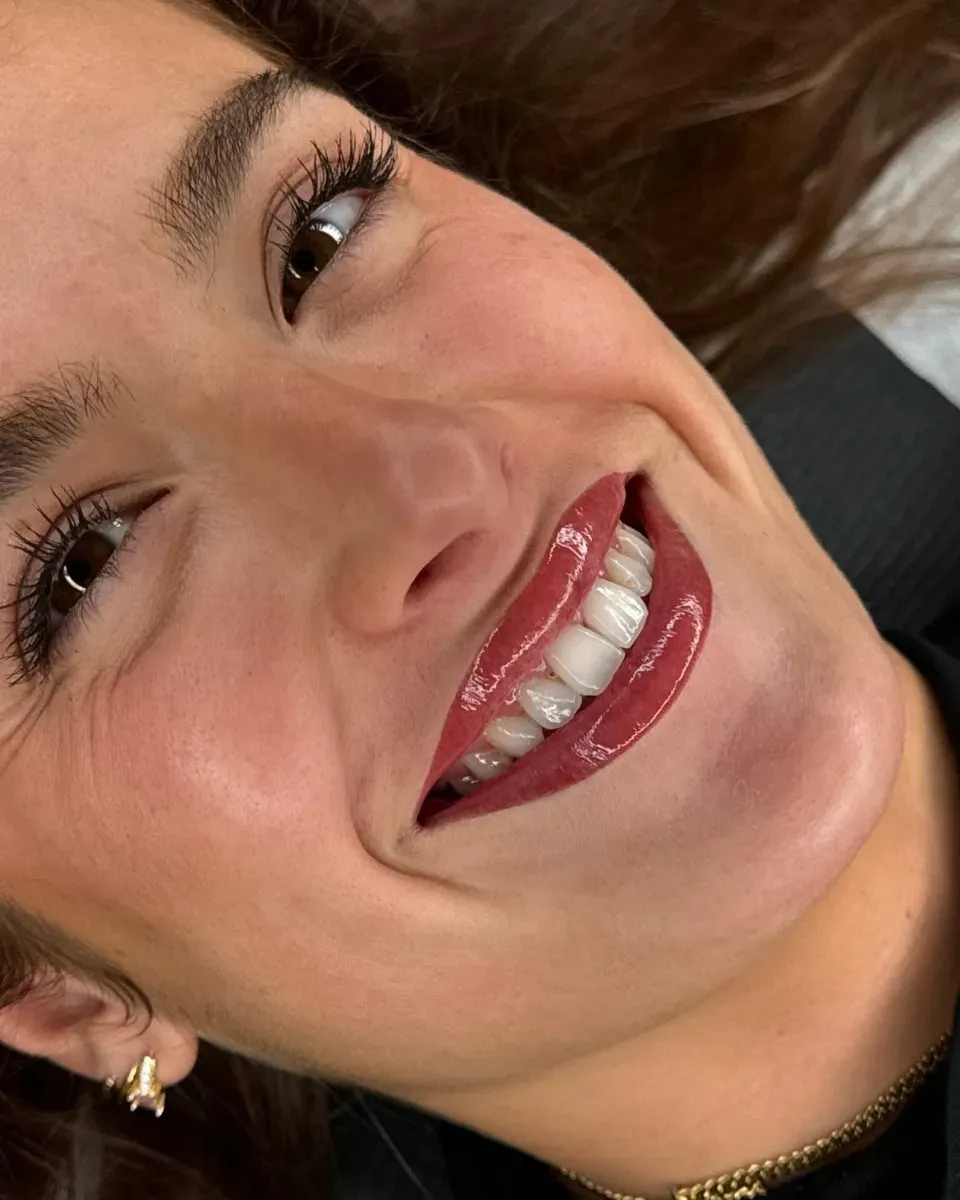
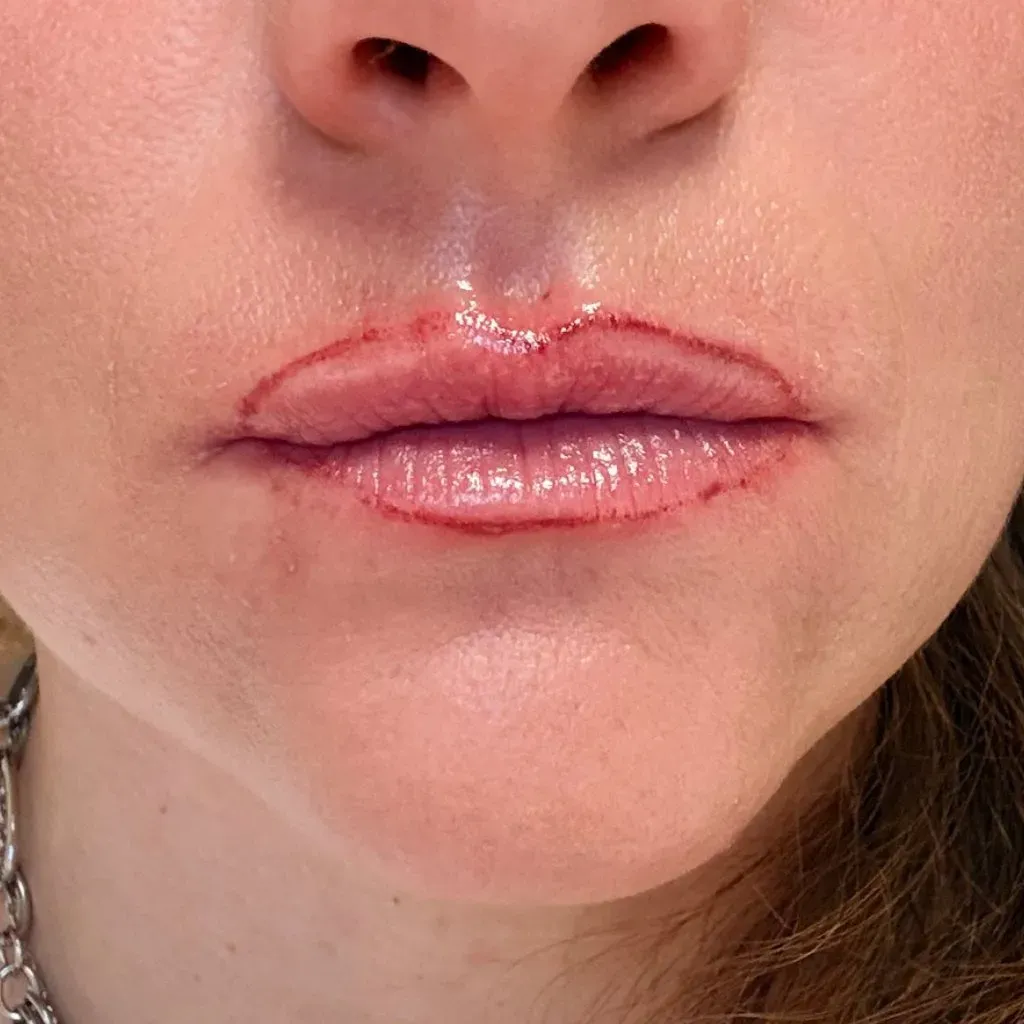
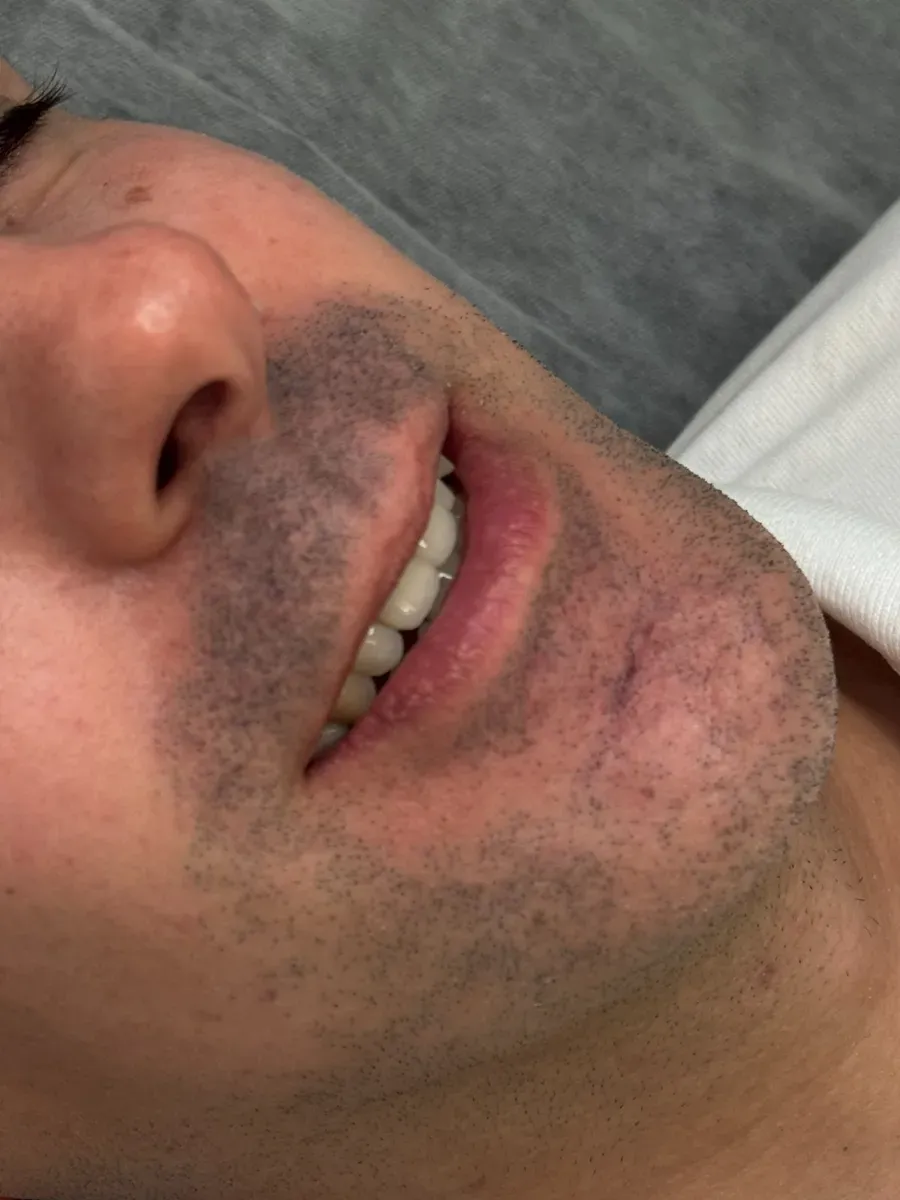
Habiba Med
You have dark or olive skin, darker or two-toned lips, and you're wondering whether lip blush will really show on you? With the right technique, the right color and an artist used to working on dark skin, the result is natural and clearly visible. Here are the techniques, the colors and the precautions to know about.
Key takeaways
- A lip tattoo works on dark and olive skin: it's a matter of technique and color.
- Dark or two-toned lips are your lips' natural color: you choose whether to keep it, lighten it or add color.
- To lighten: lip neutralization, usually 2 to 4 sessions, with 2 months between each one.
- Brown lip blush is gorgeous on Black skin and light mixed-race skin.
- Keloids on the face: not recommended. If in doubt, ask a dermatologist.
Does lip blush work on dark skin?
Yes. But dark skin contains a lot of melanin, and that changes the choice of color and technique. An artist used to dark skin knows how the pigment will look once healed. See also permanent makeup on dark skin, area by area, and all lip tattoo techniques.
What you can expect: even color, better-defined lips
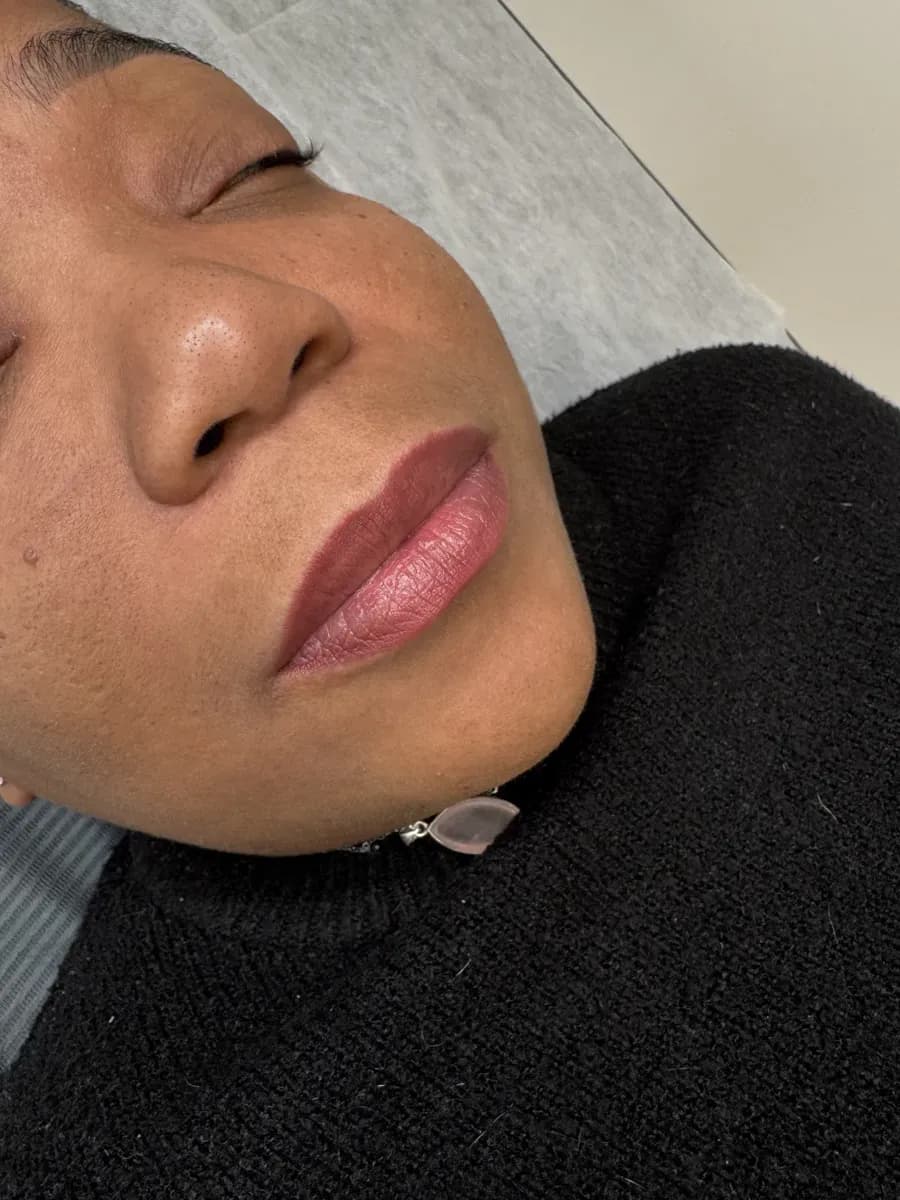
A lip tattoo adds color and definition, never volume. On dark skin, two-toned lips can be evened out so they're the same shade all over, dark lips can be lightened back to nude, pastel or slightly pink, or ombré lips can be done on lips that are already even.
What changes compared with fair skin
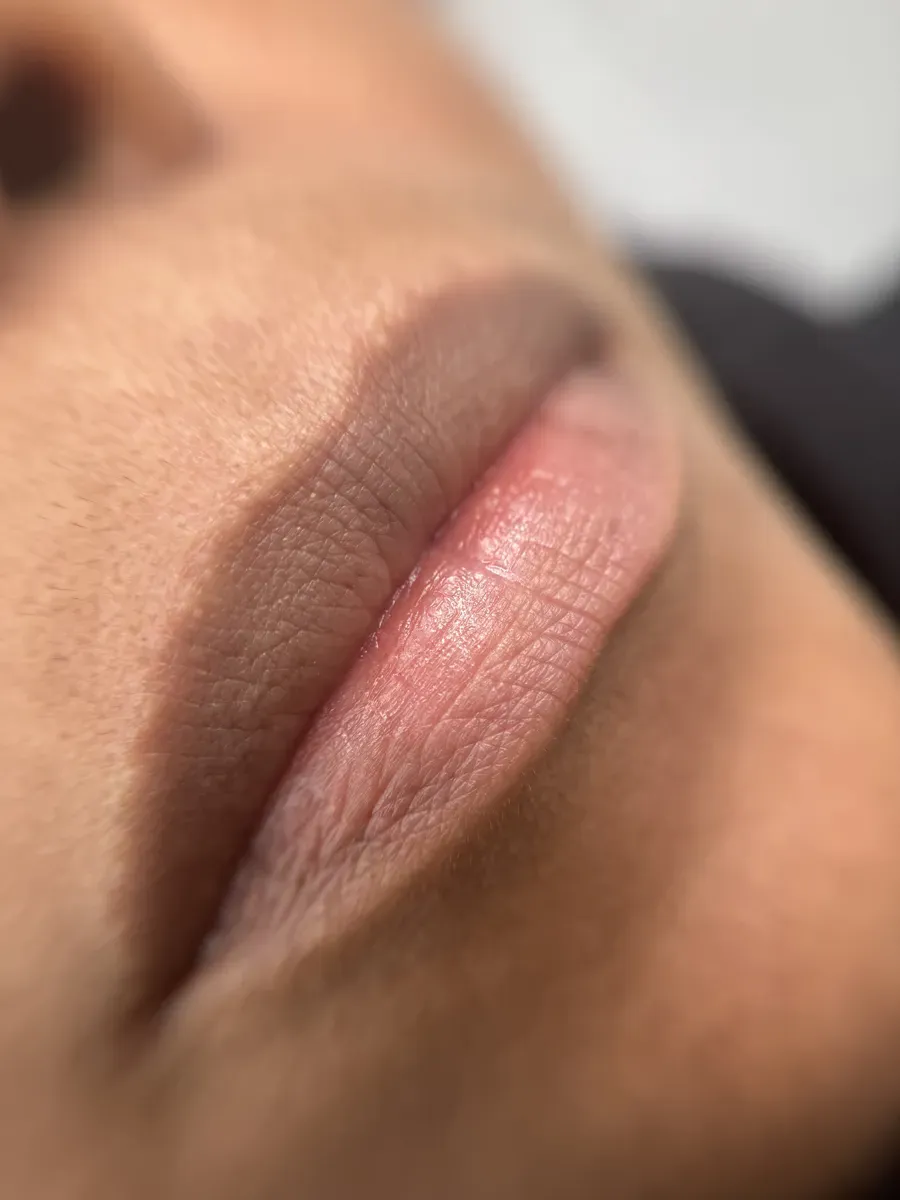
On light lips, color is added: you can choose from all your artist's shades. On dark lips you want to lighten, color is taken away: your artist then chooses the neutralization colors, based on your lips. The two strategies are completely different.
Understanding your lips: darker, two-toned, darker lip line
Why lips are often more pigmented on dark skin
It's melanin, the skin's natural pigment: the more your skin produces, the darker or more two-toned your lips can be. It's very common on olive, mixed-race and Black skin: it's not a disease, it's the lip's natural color. Over the years, sun and smoking can also darken the lips. If you're unsure whether there's a medical cause (a medication, an illness), ask a doctor.
You can love your lips just as they are, or want lighter, more even lips: it's your choice, and both are possible.
Two-toned lips, dark border, patches: common cases
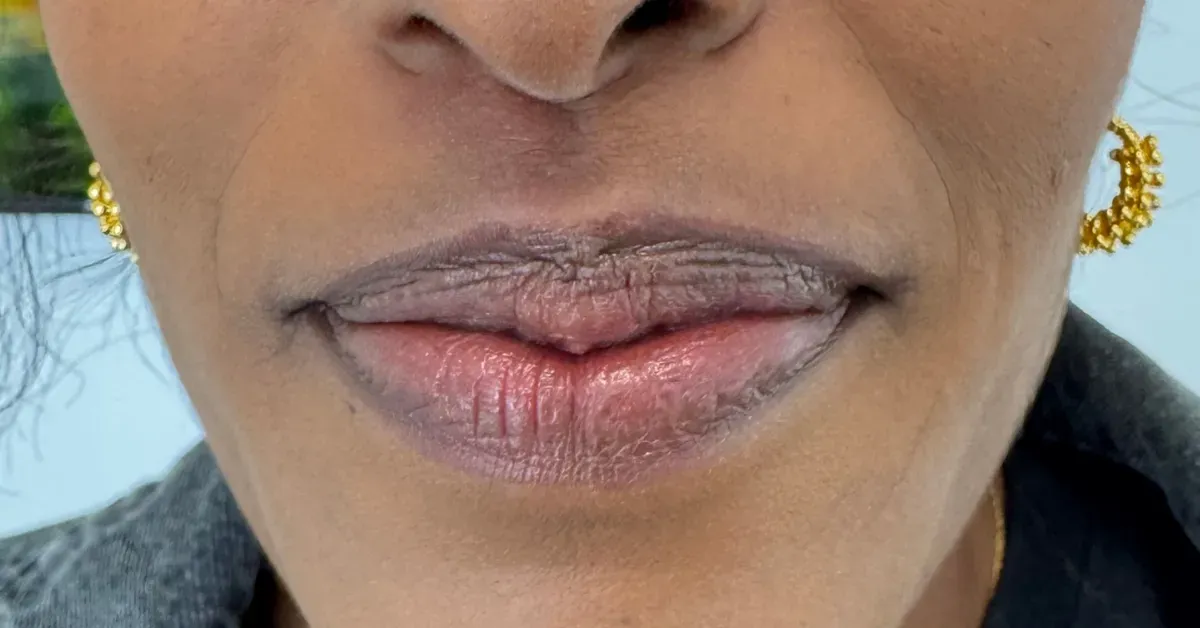
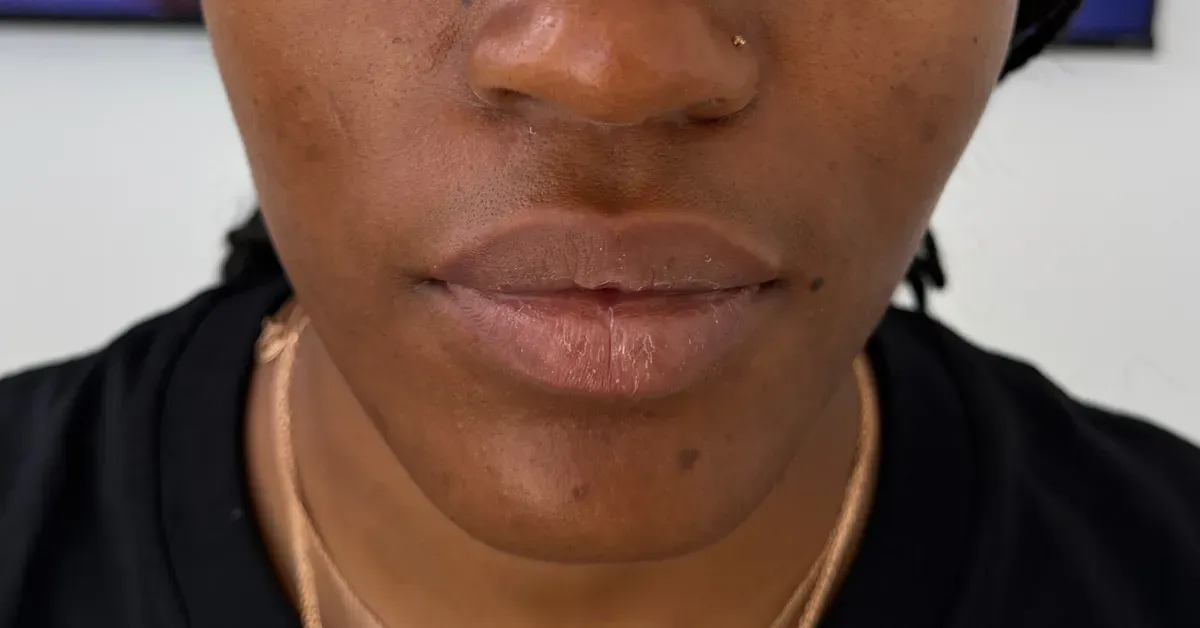
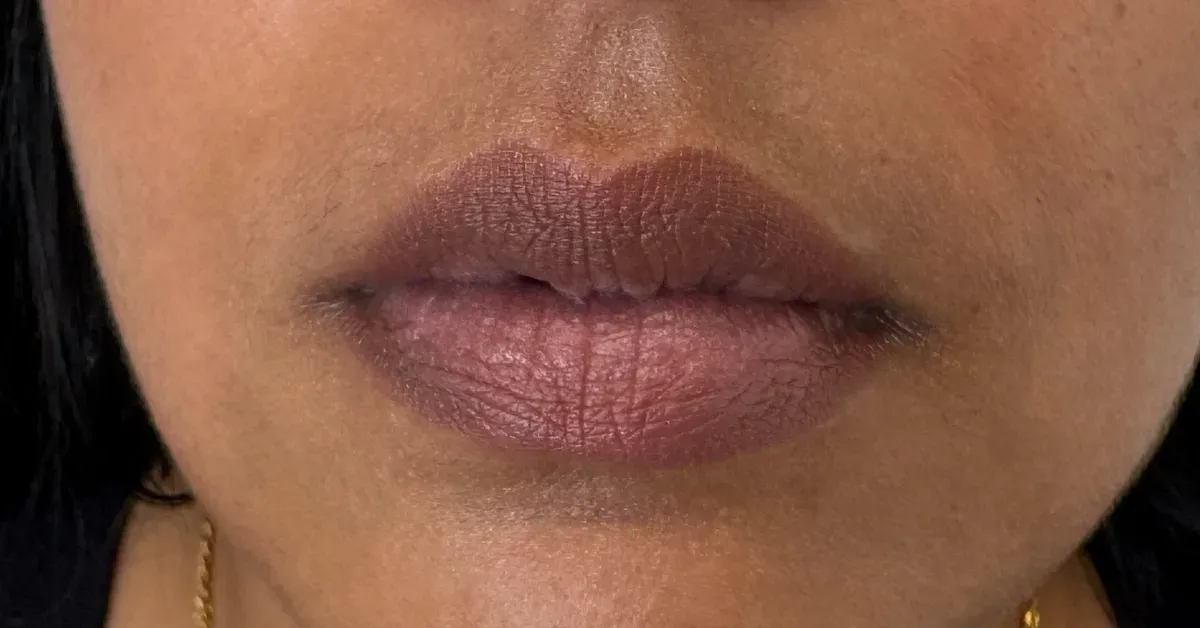
A dark lip can be slightly brown with a slightly darker outline, dark and even, very dark and cool-toned, two-toned, or full of spots. The work is not at all the same from one lip to another:
Send a photo of your lips
Before booking, send a photo of your lips, without makeup and in daylight: your artist will know which technique to steer you toward.
Neutralization, lip blush, full lips: which technique for which result
Full lip color and ombré lips suit light lips and dark lips alike: most of the time, it's a matter of taste. What matters is your natural lip color:
| Your lips | The solution |
|---|---|
| Dark, but you like their color | Lip blush, full lip color or ombré lips, depending on your taste |
| Slightly brown (light brown) | Neutralization and color possible in the same appointment |
| Deeper brown, very dark or two-toned | Neutralization first (sometimes over several sessions), then color |
Neutralize first, then add color
Lip neutralization does the opposite of lip blush: it lightens dark lips so they go back to nude, pastel or slightly pink. Neutralizing isn't whitening. Habiba always recommends one goal per session: neutralize first, then add color. After that, either you like your lightened lips and stop there, or you add a pink or a red. All the details in our guide to lip neutralization for dark lips.
Soft lip blush or more opaque full lips
Lip blush (also called BB lips or candy lips) is full lip color at a soft intensity: a “my lips, but better” effect. At a strong intensity, full lip color gives a real lipstick effect. To lighten the whole lip or the areas that are too dark, it's full lip color, not ombré. All the details in our guide to lip blush and full lip color.
Lip liner only
The brown lip liner trend comes back now and then, but it suits very few people: Habiba doesn't do it. For mixed-race skin, she prefers 3D ombré lips with a thinner outline.
Choosing your color on dark or olive skin
Your artist helps you choose, based on your natural lip color, your skin tone and what you like to wear. She shows you a color chart during the consultation, and can test the colors on your skin before starting. If your lips have been neutralized, the choice is simpler: your lightened lips, with their very powdery pink, a pink or a red.
Shade families
The exact choice is your artist's job. A few shade families, from the most subtle to the boldest:
| Shade family | The effect |
|---|---|
| Brownish pink | Nude effect, subtle for every day |
| Raspberry pink | Fresh, a real healthy glow |
| Plum pink | Deep and elegant |
| Cherry red | The lipstick effect |
Brown lips, gorgeous on the right skin
Brown lip blush is gorgeous on light mixed-race skin and on Black skin.
Why healed color differs from fresh color
Right after the session, the color is always brighter: it softens during healing. The final result shows after 1.5 to 2 months, once the pigment has settled: don't judge your color before then.
Olive skin: what changes
The same guidelines apply: it all depends on your natural lip color. If your lips are light brown, neutralization and color can be done in the same appointment; if they're light, you can choose from all your artist's shades.
Risks to know: hyperpigmentation, keloids, healing
Post-inflammatory hyperpigmentation: why and how to limit it
On melanin-rich skin, irritation or a small wound can leave a darker mark: this is post-inflammatory hyperpigmentation. A tattoo is a wound to the skin, a very light one, but a wound all the same. If you've ever been left with brown marks after a pimple or a scratch, tell your artist and ask a dermatologist before the session.
To limit this risk: an artist who skims the lip without pushing in, and healing that's respected (no picking the flakes, no sun for 1 month).
Keloids and scarring: when to say no
Keloids are raised scars, larger than the original wound. Black skin, and Asian skin too, is more prone to them. If you've had them on your face before (after a piercing, an injury, or raised acne scars), a lip tattoo is not recommended. If in doubt or if you have a history, ask a dermatologist before any session.
Cold sores and dry lips
If you've ever had herpes (cold sores), even just once, book an appointment with your doctor before your session: they can prescribe a preventive treatment. During an outbreak, the appointment is postponed.
Dry lips need preparing: a thick layer of petroleum jelly every night and a thin layer during the day, and a gentle scrub the day before.
Healing on melanin-rich skin: what to expect
Healing goes through the same stages as on other skin. Swelling goes down very quickly: about 70% within 2 hours, the rest over the day. After lip neutralization, the session is longer and the swelling can be more dramatic.
Color that darkens, then softens
- The first few days: the color darkens.
- Days 3 to 5: your lips peel. Don't pick the flakes.
- Around day 5: the color seems to have disappeared. That's normal.
- 1.5 to 2 months: the pigment has resurfaced and settled, this is the final result.
Lip neutralization also has some surprising stages, where the color can catch you off guard: don't stop halfway. The stages day by day in the lip blush healing process, and all the right habits in lip blush aftercare.
Important: protect your lips from the sun
Having dark skin and never getting sunburned doesn't mean you can skip this step. No sun for 1 month, then an SPF 50 lip balm every time you go out: the sun can change the way your lips heal and keep you from getting the best final result.
How many sessions to plan
- Lip blush or full lip color on lips whose color you like: one session, then a touch-up if needed, after 1.5 to 2 months.
- Lip neutralization: usually 2 to 4 sessions, with 2 months between each one. The darker the lips, the more sessions you need.
Always plan for one more session than announced, especially for very dark lips: every lip reacts in its own way.
Before and after: results on dark and olive skin
Examples by lip type
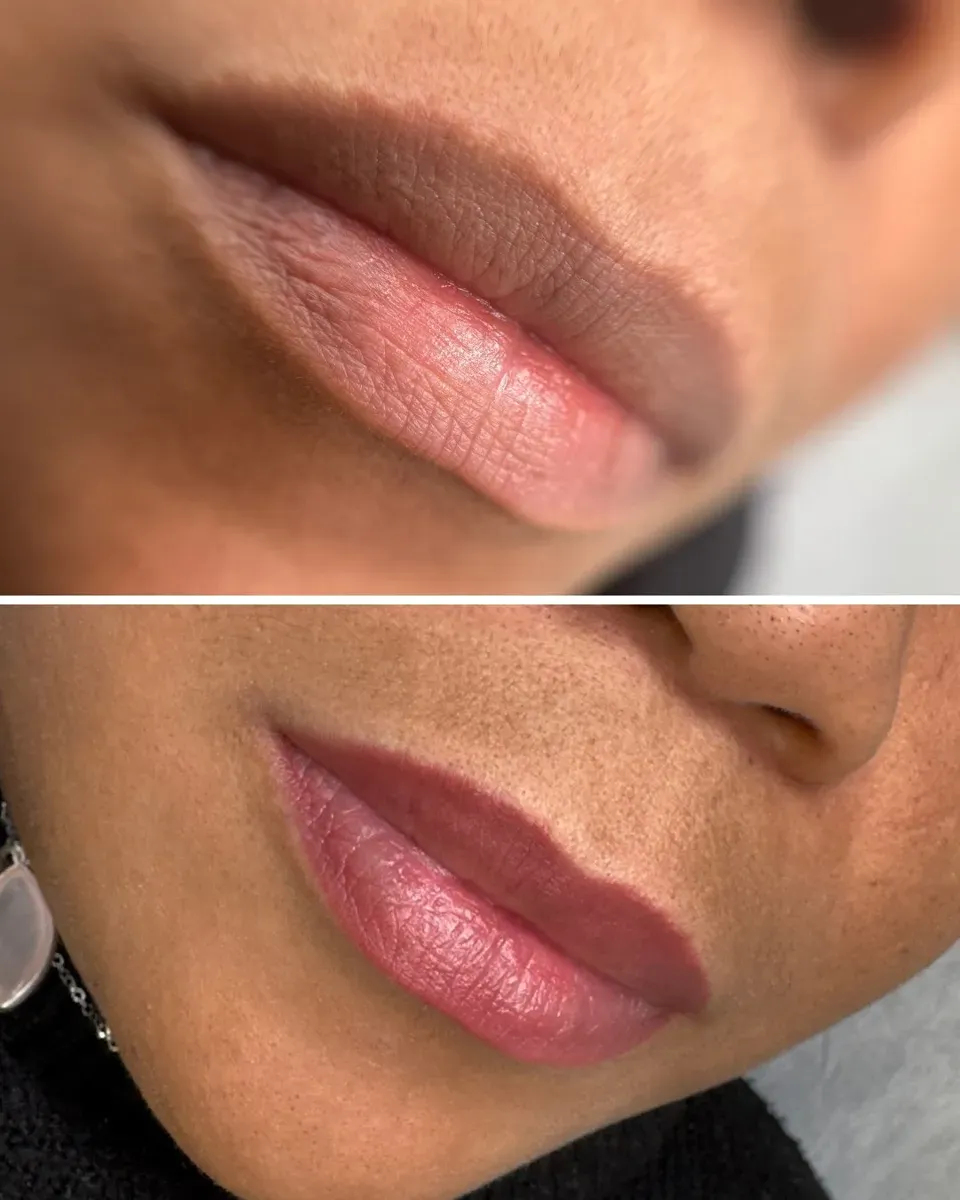
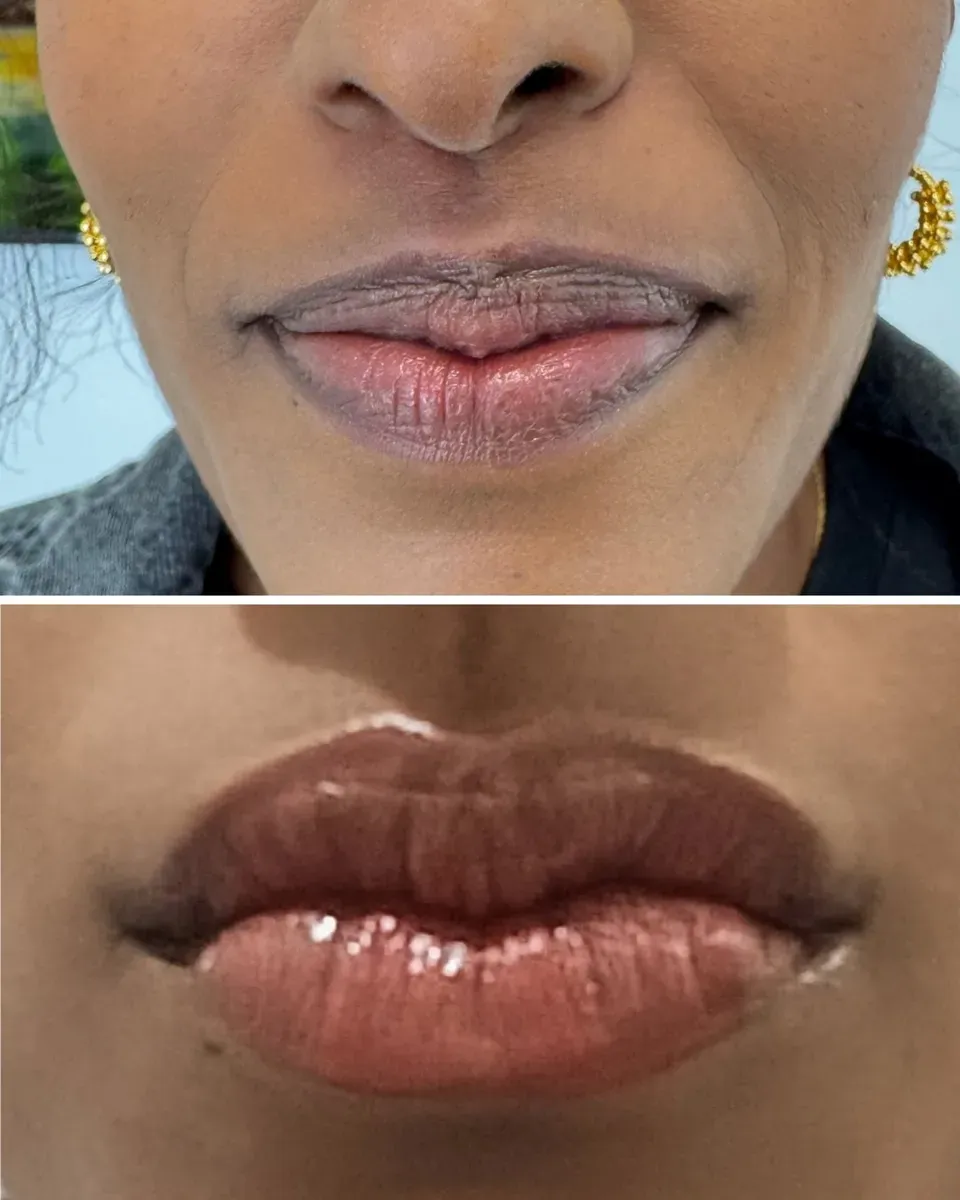
Lip neutralization can be permanent in the vast majority of cases; lip blush lasts 3 to 4 years on average. More results in our lip blush before and after.
How to read an honest before/after photo
- Right after the session, the color is brighter and the lips may be swollen: this isn't the final result, which is judged 1.5 to 2 months later.
- Ask for healed photos, in natural light: some photos may be retouched.
- Compare yourself to lips of the same shade as yours, as much as possible.
Choosing an artist experienced with dark skin
Questions to ask before booking
- Can you show me healed results on lips like mine?
- Which technique do you recommend for my lips?
- Which color, based on my lips and my skin tone?
- How many sessions should I plan?
Red flags not to ignore
- No healed results to show you
- No questions about keloids or cold sores
- A correction offered with white pigment
- An artist who never says no
A good artist explains the color she chose based on your skin tone, and knows how to say no when something isn't right for you.
For professionals: dark lips, neutralization and color theory are part of the online lip blush course.
Frequently asked questions
Yes, with the right technique, the right color and an artist used to working on dark skin.
Your artist helps you choose based on your natural lip color and your skin tone. Brown lip blush is gorgeous on Black skin.
Only if you want to lighten dark or two-toned lips. If they're light brown, neutralization and color can be done in the same appointment; otherwise, neutralize first, then add color.
On melanin-rich skin, inflammation can leave a darker mark. If you've ever been left with brown marks after a wound or a pimple, ask a dermatologist before the session.
If you've had keloids on your face before, a lip tattoo isn't recommended. If in doubt, ask a dermatologist.
No, it goes through the same stages. The final result shows after 1.5 to 2 months.
For lip blush, one session and a touch-up if needed. For lip neutralization, usually 2 to 4 sessions, with 2 months between each one. Always plan for one more.
She shows you healed results on lips like yours, asks you about keloids and cold sores, and knows how to say no.

Written by
Habiba Med
Permanent makeup artist since 2019 and trainer, I share what I see every day in my studio to help you make the right choices.